Healthy eating advice is everywhere in America. One person says to cut carbs, another swears by intermittent fasting, and someone else insists that fruit is basically candy because it contains sugar. Social media adds another layer of confusion, turning complicated nutrition research into simple rules that sound convincing but often miss the bigger picture.
The result? People give up foods they enjoy, spend more on products marketed as “clean” or “natural,” and follow restrictive eating habits that may be unnecessary—or even counterproductive.
The truth is that a healthy diet rarely depends on one magic food, one forbidden ingredient, or a strict rule about when to eat. Overall dietary patterns, portion sizes, food quality, activity levels, sleep, and consistency matter far more than many popular claims suggest.
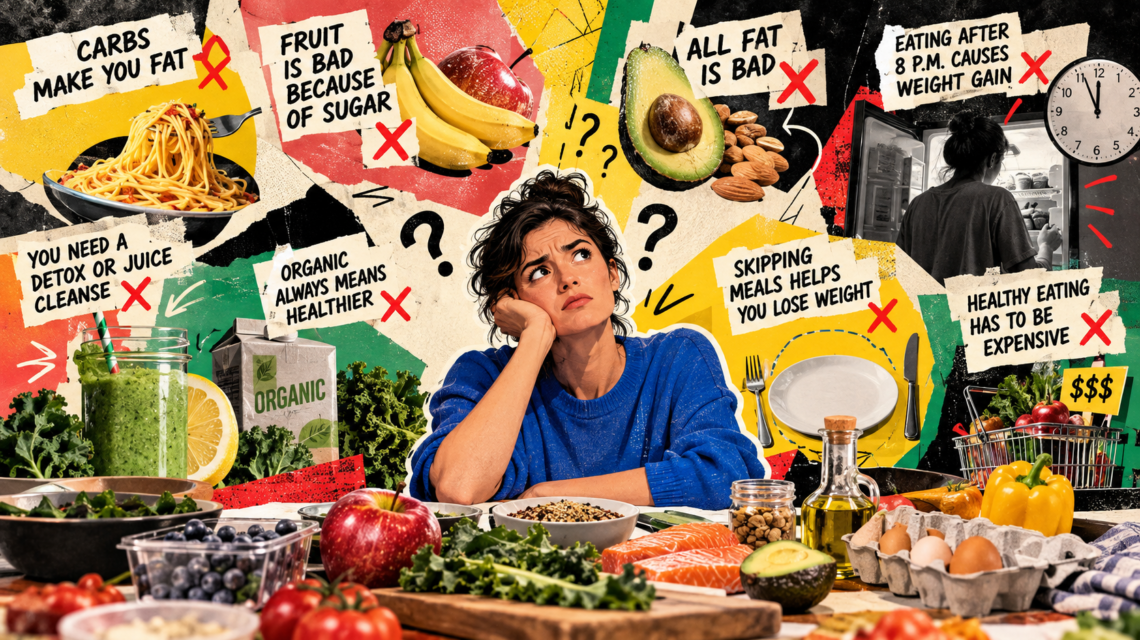
Here are eight healthy eating myths Americans keep repeating, what the evidence actually says, and what to do instead.
1. Myth: Carbs Make You Fat
This is one of the most persistent nutrition myths in America. Bread, rice, pasta, potatoes, and even oats are frequently blamed for weight gain, leading many people to believe that cutting carbohydrates is the only way to get lean.
The reality: Carbohydrates do not automatically cause weight gain.
Weight gain generally occurs when a person consistently consumes more calories than their body uses. Carbohydrates provide about four calories per gram, just like protein, while fat provides about nine calories per gram. The source of those calories and the overall dietary pattern matter.
There is also an important distinction between different carbohydrate sources. Whole grains, beans, lentils, fruit, and vegetables provide nutrients and, in many cases, fiber. Sugary drinks, candy, and highly refined snack foods can be easier to overconsume and may offer less nutritional value.
Low-carbohydrate diets can help some people manage their appetite or lose weight, but they are not the only effective approach. Other people do well with balanced diets that include carbohydrates.
What to do instead: Choose more fiber-rich carbohydrates, watch portions of calorie-dense foods, and pair carbohydrates with protein and healthy fats when practical. A bowl of oatmeal with nuts and fruit is not nutritionally equivalent to a large sugary pastry, even though both contain carbohydrates.
2. Myth: Eating After 8 P.M. Automatically Causes Weight Gain
“Never eat after 8 p.m.” is a familiar rule in weight-loss conversations. It sounds simple, which may explain why it keeps circulating.
The reality: Your body does not suddenly turn food into fat at 8 p.m.
Weight management depends substantially on total energy intake over time, not a universal cutoff on the clock. Eating late can still affect weight indirectly, however. Late-night snacking may add calories beyond what you need, especially when it involves chips, cookies, ice cream, or sugary drinks while watching TV.
Meal timing can also matter for sleep, blood sugar regulation, and individual health needs. Research on circadian rhythms suggests that eating patterns and timing may influence metabolism, but this does not mean every person must stop eating at the same hour.
A person who works a late shift or exercises in the evening may reasonably need a later meal. Someone who regularly snacks out of boredom after dinner may benefit from changing that habit.
What to do instead: Focus on your overall eating pattern and hunger cues. If you are genuinely hungry at night, consider a balanced snack such as Greek yogurt, fruit with peanut butter, or whole-grain toast with an egg. If late-night eating is mostly habitual, try identifying the trigger rather than relying on an arbitrary time rule.
3. Myth: Fruit Is Bad for You Because It Contains Sugar
Fruit often gets caught in the crossfire of low-sugar and low-carb diets. Some people avoid bananas, grapes, mangoes, or other sweet fruits because they believe the sugar will sabotage their health goals.
The reality: Whole fruit is not the same as added sugar.
Whole fruit contains naturally occurring sugars along with water, fiber, vitamins, minerals, and beneficial plant compounds. Fiber helps slow digestion and can make fruit more filling than many highly processed sweet snacks.
The American Heart Association and other health organizations distinguish between naturally occurring sugars in foods such as fruit and added sugars in products such as soda, candy, and many packaged desserts.
That does not mean unlimited portions are always appropriate for every individual. People managing diabetes, for example, may need to pay attention to carbohydrate portions and how different foods affect their blood glucose. But fruit does not need to be universally avoided.
Fruit juice is another matter: it generally contains less fiber per serving and is easier to consume quickly in large quantities than whole fruit.
What to do instead: Eat a variety of whole fruits. Choose whole apples over apple juice when possible, add berries to oatmeal, or keep bananas available for a convenient snack. If you have diabetes or another condition requiring individualized nutrition advice, work with a qualified healthcare professional or registered dietitian.
4. Myth: All Fat Is Bad for Your Heart and Waistline
For years, low-fat labels were treated as a shortcut to healthier eating. Many Americans learned to fear foods such as nuts, avocados, olive oil, and eggs simply because they contain fat.
The reality: The type of fat matters more than simply eliminating fat.
Unsaturated fats, found in foods such as olive oil, nuts, seeds, avocados, and many fish, can be part of a heart-healthy eating pattern. Replacing some saturated fats with unsaturated fats can help improve blood cholesterol levels.
Saturated fat is commonly found in butter, fatty cuts of meat, high-fat dairy products, and some tropical oils. The American Heart Association recommends limiting saturated fat and replacing it with healthier unsaturated fats rather than relying on refined carbohydrates.
Trans fats produced through partial hydrogenation have been largely removed from the U.S. food supply, although consumers should still check ingredient labels where relevant.
Fat is also calorie-dense, so large quantities of oils, nut butters, and other high-fat foods can contribute to excess calorie intake. But that is different from saying these foods are inherently unhealthy.
What to do instead: Use olive or canola oil in place of butter when appropriate, eat nuts in sensible portions, and include fish, seeds, or avocado as part of a varied diet. Do not assume that a low-fat packaged food is automatically healthier; check its added sugar, sodium, fiber, and overall ingredients.
5. Myth: You Need a Detox, Juice Cleanse, or Special Tea to Remove Toxins
Detox drinks, juice cleanses, and “flat tummy” teas are heavily promoted online, especially after holidays, vacations, and periods of overeating. They promise to flush out toxins, reset digestion, or rapidly undo a few days of indulgence.
The reality: Your body already has systems that process and eliminate waste.
Your liver helps metabolize substances, your kidneys filter blood and remove waste through urine, and your digestive system eliminates waste through bowel movements. These systems do not generally need a commercial cleanse to perform their normal functions.
Some detox programs cause short-term weight loss, but that change may reflect water loss, reduced food intake, or changes in bowel contents—not a special fat-burning or toxin-removal effect. Severe restriction can also leave people short of important nutrients, while some detox supplements may contain ingredients that cause side effects or interact with medications.
Juices can provide certain vitamins, but replacing balanced meals with juice alone may leave you short on protein and fiber. Laxative-based teas can cause diarrhea and dehydration.
What to do instead: Support normal health with adequate fluids, fiber-rich foods, a varied diet, sufficient sleep, and regular physical activity. If you are concerned about a genuine exposure to a toxic substance, seek medical or poison-control advice rather than relying on a cleanse.
6. Myth: “Natural,” “Organic,” or “Gluten-Free” Always Means Healthier
American grocery stores are filled with labels designed to make products appear healthier: natural, organic, gluten-free, plant-based, and made with whole grains. These labels can provide useful information, but they are not a complete measure of nutritional quality.
The reality: A health-related label does not automatically make a product nutritious.
Organic foods are produced under specific agricultural standards, but the organic label does not guarantee that a food is low in added sugar, sodium, or calories. Organic cookies are still cookies.
Gluten-free foods are essential for people with celiac disease and may be appropriate for others with medically established needs. But a gluten-free cookie or cracker is not automatically healthier than its conventional counterpart. Some gluten-free packaged foods contain less fiber or have similar amounts of sugar, salt, and calories.
Likewise, “natural” does not have one universal meaning across all food labels, and it should not be interpreted as proof that a product is healthy. Plant-based products can be nutrient-rich, but some are highly processed and high in sodium or saturated fat.
What to do instead: Read the Nutrition Facts label and ingredient list. Compare added sugars, sodium, saturated fat, fiber, protein, and serving sizes. Buy organic or specialty products when they meet your needs and budget, but do not assume the label alone settles the question.
7. Myth: Skipping Meals Is the Best Way to Lose Weight
Skipping breakfast or lunch can seem like an easy way to cut calories. Intermittent fasting has also become popular, with some people adopting fixed eating windows to simplify their routine.
The reality: Meal timing can help some people, but skipping meals is not a guaranteed shortcut.
Weight loss requires a sustained energy deficit, and people can achieve that through different meal patterns. Some find a structured eating window convenient; others feel better eating regular meals throughout the day.
Skipping meals can backfire for some people if it leads to intense hunger, overeating later, low energy, or difficulty concentrating. For others, it may be manageable, depending on their schedule, preferences, and health circumstances.
There is no universal rule that everyone must eat breakfast, nor is there strong reason to assume that skipping breakfast automatically produces superior weight loss. What matters is whether the overall pattern is nutritionally adequate and sustainable.
People who are pregnant, have a history of eating disorders, take medication that can cause low blood sugar, or have certain medical conditions should seek professional guidance before adopting restrictive fasting routines.
What to do instead: Choose a meal schedule that helps you manage hunger and maintain a balanced diet. If you regularly skip lunch and end up overeating at night, try a satisfying midday meal containing protein, vegetables or fruit, and a fiber-rich carbohydrate. Consistency matters more than forcing yourself into a trendy routine.
8. Myth: Healthy Eating Has to Be Expensive
Many Americans believe that eating well requires organic produce, premium protein powders, specialty health foods, and expensive grocery-store trips. This perception can make healthy eating seem unrealistic for families working with tight budgets.
The reality: Nutritious eating can be built around affordable staples.
Fresh berries in winter, specialty protein bars, and prepackaged salads can be expensive. But many nutritious foods are budget-friendly, particularly when bought in season, frozen, dried, or canned.
Examples include:
- Beans and lentils: Affordable sources of fiber and plant protein.
- Oats and brown rice: Versatile grains that can form the base of meals.
- Eggs: A convenient source of protein and other nutrients.
- Frozen vegetables: Often economical, long-lasting, and nutritionally comparable to fresh vegetables.
- Canned fish: Tuna, salmon, and sardines can provide protein, and some varieties provide omega-3 fats.
- Plain yogurt: A flexible source of protein and calcium.
- Canned or frozen fruit: Useful options when fresh fruit is expensive or spoils quickly.
Planning meals around what is on sale, cooking larger batches, and using leftovers can also reduce waste. Canned foods can be high in sodium or added sugar, so compare labels and choose lower-sodium or no-added-sugar options when available.
What to do instead: Build a grocery list around a few affordable proteins, whole grains, fruits, and vegetables. You do not need every meal to look like a wellness influencer’s plate. A bowl of beans and rice with vegetables can be a practical, nutritious meal.
The Bottom Line: Stop Looking for One Perfect Food Rule
Healthy eating becomes unnecessarily confusing when every food is classified as either “good” or “bad.” Carbohydrates are not automatically fattening, fruit is not equivalent to candy, and eating after 8 p.m. does not automatically cause weight gain. Similarly, a detox tea cannot replace the body’s normal waste-removal systems, and an expensive organic product is not necessarily more nutritious than an affordable alternative.
For most Americans, a practical approach is to eat a variety of vegetables and fruits, choose whole grains and suitable protein sources, favor unsaturated fats, limit excess added sugars and sodium, and pay attention to portions without becoming obsessed with every bite.
The best eating plan is one that meets your nutritional needs, fits your budget and lifestyle, and is sustainable over time. If you have a medical condition or specific dietary requirements, personalized guidance from a registered dietitian or healthcare professional can help you separate useful advice from online myths.
Frequently Asked Questions
1. What is the biggest healthy eating myth?
One of the biggest is that a single nutrient—especially carbohydrates or fat—automatically causes weight gain. Overall calorie intake, food quality, activity, and long-term habits matter more than eliminating one entire nutrient group.
2. Is eating rice or bread every day unhealthy?
Not necessarily. Whole-grain bread and brown rice provide fiber and nutrients, while refined versions can also fit into a balanced diet. Portions and the overall meal pattern matter.
3. Is fruit sugar as bad as added sugar?
No. Whole fruit provides fiber, water, vitamins, and other beneficial compounds. Added sugars in sugary drinks, candy, and many packaged foods provide fewer of those benefits. People managing blood glucose may need to consider fruit portions.
4. Does eating late at night cause belly fat?
There is no universal 8 p.m. cutoff that causes fat gain. Regularly eating more calories than your body needs can lead to weight gain, and late-night snacking may contribute to that for some people.
5. Are organic foods always healthier?
No. Organic certification describes how foods are produced under specific standards; it does not guarantee low sugar, low sodium, or superior nutritional value in every case.
6. Do detox diets actually work?
There is little convincing evidence that commercial detox diets remove toxins better than the body’s normal liver, kidney, and digestive functions. Some programs cause temporary weight changes mainly through calorie restriction or fluid loss.
7. Can you eat healthy on a tight budget?
Yes. Beans, lentils, oats, eggs, frozen vegetables, canned fish, and seasonal or frozen fruit can make nutritious meals more affordable. Meal planning and reducing food waste also help.
8. Should everyone try intermittent fasting?
No. Some adults find it useful, but it is not necessary for weight loss or good health. Its suitability depends on individual needs, medical circumstances, and whether it supports a sustainable, balanced eating pattern.
Sources and Further Reading
- U.S. Department of Agriculture — MyPlate: Healthy Eating on a Budget
- Centers for Disease Control and Prevention — Healthy Eating for a Healthy Weight
- American Heart Association — Dietary Fats
- U.S. Food and Drug Administration — How to Understand and Use the Nutrition Facts Label
- National Institute of Diabetes and Digestive and Kidney Diseases — Your Digestive System and How It Works
This article is for general educational purposes and is not a substitute for individualized medical or nutrition advice.