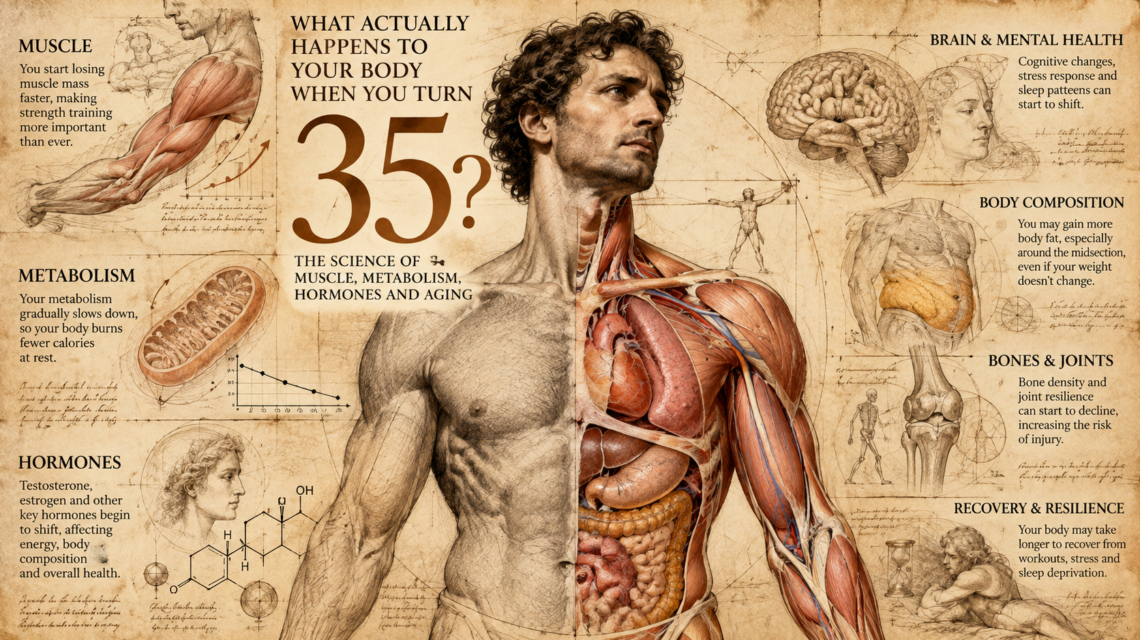
You turn 35, and suddenly the jokes about getting older start to feel a little more personal. The weight that once disappeared after a few weeks of exercise seems more stubborn. You might feel sore for longer after a demanding workout, notice changes around your waist, or find it harder to maintain the strength you once took for granted.
But is something fundamentally different about your body on your 35th birthday?
The short answer is no—there is no biological switch that suddenly slows your metabolism, drains your hormones or makes muscle loss inevitable at 35. Aging is a gradual process, and the pace of change varies considerably between individuals.
However, your mid-30s are a useful time to pay attention to habits that influence your long-term health. Muscle strength, body composition, sleep, physical activity, hormonal health and metabolic function all interact. Some changes are associated with biological aging, while others reflect years of reduced activity, inadequate recovery, changes in diet, stress or underlying health conditions.
A major study published in Science in 2021, which analysed daily energy expenditure across a wide age range, found that energy expenditure adjusted for fat-free mass remains broadly stable from approximately age 20 to 60. That challenges the popular belief that everyone’s metabolism automatically slows dramatically in their 30s. [1]
So, what actually happens to your body after 35? Let’s examine the evidence.
1. Your Muscle Mass and Strength May Begin to Change
One of the most important changes associated with aging is the gradual decline in muscle mass, strength and physical performance.
Muscles are not simply there to make you look fit. They help you climb stairs, carry groceries, maintain balance, protect your joints and perform everyday activities. They also contribute to glucose regulation and overall metabolic health.
Does muscle loss start at 35?
Muscle mass and physical performance generally peak in early adulthood or around the 30s, depending on the measure and individual. Research from the National Institute on Aging’s Baltimore Longitudinal Study of Aging indicates that muscle performance can begin declining gradually after this period, with more pronounced declines commonly occurring at older ages.
This does not mean everyone starts losing noticeable amounts of muscle as soon as they turn 35. Nor does it mean that muscle loss is unavoidable.
The amount of muscle you maintain depends on several factors, including:
- Whether you perform regular resistance training.
- How much protein and energy you consume.
- How physically active you are throughout the day.
- The quality and quantity of your sleep.
- Your genetics, medical history and hormonal health.
For example, a 40-year-old who regularly performs progressive strength training may be stronger and more muscular than a sedentary 25-year-old.
Why muscle matters more than appearance
Muscle tissue helps the body use glucose and supports physical independence as people age. Losing muscle while gaining fat can therefore affect health even when body weight changes very little.
Researchers call the progressive loss of muscle strength and function associated with aging sarcopenia. Clinically significant sarcopenia is not simply an inevitable consequence of reaching 35; it is a condition assessed using measures of muscle strength, muscle quantity and physical performance.
Can you still build muscle after 35?
Absolutely. Adults can gain muscle and strength through resistance training well beyond their 30s and 40s.
The most useful approach is to train consistently, gradually increase the challenge, eat enough protein and allow sufficient recovery between demanding sessions.
If you are new to exercise, start with manageable resistance and good technique. If you already train, focus on progressive overload rather than assuming you need a completely different workout simply because you are older.
The takeaway: Your 30s are not a deadline for building muscle. They are an excellent time to develop habits that help preserve it for decades.
2. Does Your Metabolism Slow Down After 35?
This is one of the most persistent beliefs about aging—and one of the most misunderstood.
Many people assume that their metabolism drops sharply in their mid-30s. They may attribute every additional kilogram to their age, even when their daily routine has changed considerably.
The scientific picture is more nuanced.
What the research actually found
In a landmark 2021 study published in Science, Pontzer and colleagues analysed data from 6,421 people aged eight days to 95 years across multiple populations. Researchers measured total daily energy expenditure using the doubly labelled water method, a well-established technique for measuring energy expenditure in free-living people. [1]
After accounting for body size and composition, the researchers identified four broad metabolic life stages:
- Infancy: Energy expenditure rises rapidly during the first year of life.
- Childhood and adolescence: Adjusted energy expenditure gradually approaches adult levels.
- Adulthood, approximately ages 20–60: Adjusted energy expenditure remains broadly stable.
- After approximately age 60: Adjusted energy expenditure begins to decline.
This finding does not mean that every 35-year-old burns exactly the same number of calories as every 25-year-old. It means that chronological age alone does not explain a dramatic, universal metabolic slowdown during the 30s.
Your total calorie requirements still depend on factors such as body size, muscle mass, movement, exercise, occupation and individual physiology.
Why can weight gain become more common after 35?
The answer may have less to do with a suddenly broken metabolism and more to do with the way daily life changes.
Consider a typical progression:
- You move from a physically active routine to a desk-based job.
- You walk less because commuting and household responsibilities consume your time.
- You stop playing sports or going to the gym as frequently.
- You sleep less, experience more stress or rely on convenient, calorie-dense foods.
- Your body weight increases, but your activity level does not increase to match it.
Over time, these changes can create a sustained energy surplus.
There is another important factor: your energy needs can change when your body composition changes. Muscle and fat tissue have different energy requirements, and a larger or smaller body generally requires a different amount of energy to maintain.
Weight loss can also become more difficult because a lighter body requires fewer calories than a heavier one, while hunger and changes in spontaneous activity may make a calorie deficit harder to maintain.
What about the claim that metabolism drops by 5% every decade?
There is no universal rule that everyone’s metabolism falls by a fixed percentage every decade after 30. Estimates vary depending on whether researchers measure resting metabolic rate, total daily energy expenditure or energy expenditure adjusted for body composition.
These measurements are related, but they are not interchangeable.
The takeaway: If you are gaining weight after 35, do not automatically blame your metabolism. Review your activity, food intake, sleep, body composition and health before concluding that age is the cause.
3. Your Hormones May Change—But Not All at Once
Hormones help regulate muscle maintenance, reproductive function, appetite, bone health, sleep and numerous other processes. Their production and activity can change with age, but these changes do not happen at the same rate in everyone.
A review of hormonal and metabolic changes in aging highlights the interaction between endocrine function, body composition, chronic disease and lifestyle. [3]
The important distinction is that normal age-related hormonal changes are not the same thing as a hormone deficiency or medical disorder.
Testosterone in men
Testosterone supports reproductive function, muscle development, bone health and other physiological processes.
Average testosterone levels in men may decline gradually with age, but the amount and timing vary considerably. The Endocrine Society notes that testosterone levels are influenced by age, illness, medication, nutrition and other factors. [4]
A man who feels less energetic at 38 does not necessarily have low testosterone. Fatigue, reduced motivation, changes in sexual function and reduced exercise performance can have many possible explanations, including poor sleep, stress, depression, medication effects and other medical conditions.
If symptoms suggest testosterone deficiency, a clinician can assess them and arrange appropriate testing. The Endocrine Society recommends diagnosing hypogonadism only when compatible symptoms or signs are accompanied by unequivocally and consistently low testosterone concentrations; diagnosis generally requires repeat morning testing. [4]
Testosterone treatment is not a general anti-aging strategy and should not be started simply to improve gym performance or reverse normal aging.
Hormonal changes in women
Women also experience hormonal changes throughout adulthood. The transition to menopause, known as perimenopause, can involve changes in estrogen and progesterone, irregular periods, hot flashes, sleep disruption and changes in body composition.
The timing varies substantially. Some women begin experiencing perimenopausal changes in their 40s, while others experience them earlier or later.
Declining estrogen around menopause is associated with changes in fat distribution and bone health. However, not every change in weight or body shape is hormonal, and menopause does not make weight gain inevitable.
Regular physical activity, resistance training, adequate nutrition and attention to sleep remain useful throughout this transition.
What about growth hormone and other hormones?
Growth hormone secretion patterns and other endocrine functions change with age. But hormone levels do not operate independently: body composition, sleep, physical activity, nutritional status and disease can all influence hormonal systems.
A single hormone result also rarely explains every symptom.
The takeaway: Hormones matter, but turning 35 does not automatically mean your testosterone, estrogen or growth hormone has become abnormally low. Persistent or concerning symptoms deserve proper assessment rather than self-diagnosis or unsupervised hormone supplements.
4. Why Can Belly Fat Become Harder to Lose?
You may notice that your waistline changes even when the number on the scale barely moves. This can happen when body composition changes—particularly when fat mass increases while lean mass decreases.
Body composition refers to the proportions of fat, muscle, bone, water and other tissues in the body. It often provides a more useful picture of health and fitness than body weight alone.
Why fat distribution matters
As people age, fat distribution can change, and abdominal or visceral fat may become more prominent. Visceral fat is stored deep within the abdominal cavity around internal organs. It differs from subcutaneous fat, which lies just beneath the skin.
Excess visceral fat is associated with a greater risk of metabolic problems, including insulin resistance and cardiovascular disease.
A 1999 analysis from the Fels Longitudinal Study found age-associated changes in body composition, including increases in fat mass and reductions in fat-free mass. The researchers also found that physical activity was associated with more favourable body-composition patterns. [5]
A later review of metabolic changes in aging similarly described increases in central adiposity and muscle loss, while highlighting how sedentary behaviour can exacerbate these changes. [6]
These studies do not mean that everyone will develop abdominal fat after 35. Instead, they suggest that aging and lifestyle can interact to influence where fat is stored and how much lean tissue is maintained.
Why the same weight can look different
Imagine two people who both weigh 80 kilograms.
One has more muscle and less body fat. The other has less muscle and more fat, particularly around the waist.
Their scales show the same number, but their body composition and physical capabilities may be quite different.
This is one reason why relying only on body weight can be misleading. Waist circumference, strength, fitness and other relevant health measures can help provide additional context.
Can you reduce belly fat after 35?
Yes. You cannot reliably choose where your body loses fat first, but reducing overall body fat can reduce abdominal fat over time.
Useful strategies include:
- Creating a sustainable calorie deficit if fat loss is appropriate for you.
- Performing resistance training to preserve or build muscle.
- Combining aerobic activity with regular daily movement.
- Eating enough protein and fibre as part of a balanced diet.
- Limiting frequent high-calorie foods and drinks that make energy intake difficult to manage.
- Getting sufficient sleep and addressing persistent sleep problems.
Crash diets and excessive exercise can be counterproductive, particularly when they lead to muscle loss, exhaustion or unsustainable habits.
The takeaway: A changing waistline is not proof that your metabolism has failed. It is a reason to examine body composition, movement, nutrition and relevant health factors.
5. Why Might You Need More Time to Recover From Exercise?
Perhaps you could once play a full game of sport, train hard the next morning and feel fine. Now, after an unfamiliar workout, your muscles may remain sore for several days.
Is aging responsible?
It can contribute to changes in physical performance and recovery, but the relationship is more complicated than the popular idea that recovery suddenly becomes slower at 35.
What influences recovery?
Recovery involves several processes, including muscle repair, replenishment of energy stores, nervous-system adaptation, restoration of fluid balance and the resolution of exercise-induced fatigue.
The time required depends on several variables:
- Training intensity: Very demanding sessions can create more fatigue.
- Training volume: A sudden increase in sets, distance or duration can exceed your current capacity.
- Exercise familiarity: Unfamiliar movements, especially those involving eccentric muscle contractions, can cause more muscle soreness.
- Sleep: Insufficient or disrupted sleep can interfere with readiness and performance.
- Nutrition: Inadequate energy, protein or carbohydrate intake may compromise training adaptation and recovery.
- Stress and illness: Work pressure, poor mental health and infections can affect how well you tolerate exercise.
- Training history: A consistently trained person may recover differently from someone returning after months or years of inactivity.
Age-related changes in muscle function and other physiological systems can influence exercise tolerance. Nevertheless, research does not support a universal rule that every person requires substantially longer recovery immediately after turning 35.
Is muscle soreness a sign of a good workout?
Not necessarily.
Delayed-onset muscle soreness, commonly called DOMS, often develops after unfamiliar or strenuous exercise. It can peak a day or two after the session, but its intensity does not reliably indicate how effective the workout was.
You can make progress without feeling extremely sore after every session.
Persistent soreness, worsening performance or unusual fatigue may indicate that your training load, recovery habits or health needs attention.
How should you adapt your training after 35?
You do not need to stop lifting heavy weights, abandon intense exercise or train only with light resistance because of your age.
Instead:
- Increase training volume and intensity gradually.
- Schedule demanding sessions so that the same muscle groups have time to recover.
- Maintain a consistent sleep routine.
- Eat enough to support your training goals.
- Adjust the programme when fatigue accumulates instead of pushing through every session.
- Include easier training days when needed.
If you experience persistent pain, unexplained exhaustion, chest pain, faintness or unusual shortness of breath, seek appropriate medical advice rather than assuming the symptoms are part of normal aging.
The takeaway: Recovery should be individualised. Your age is one consideration, but training load, sleep, nutrition, health and fitness level can be just as important.
6. Your Bones, Joints and Mobility Deserve More Attention
Muscle is only part of the picture. Bone density, joint health, balance and mobility also influence how well you move as you get older.
Bone tissue continually breaks down and rebuilds. The balance between these processes changes over time and is influenced by age, hormones, nutrition, physical activity, genetics and certain medical conditions.
Women may experience more rapid bone loss around the menopausal transition. Men can also experience bone loss with aging, although the pattern and timing differ.
What can you do to support bone health?
Weight-bearing activities, resistance training and exercises that challenge balance can help support musculoskeletal health. Examples include brisk walking, stair climbing, appropriately prescribed strength training and balance exercises.
However, not every exercise is suitable for every individual. People with osteoporosis, previous fractures, significant joint disease or other medical limitations may need tailored advice.
Mobility is equally important. Regular movement helps maintain the ability to bend, reach, squat, walk and perform everyday activities comfortably.
The takeaway: You do not need to wait until your 60s to care about bone and joint health. The habits you establish in your 30s can help support your future mobility.
7. Sleep, Stress and Energy May Become More Noticeable Factors
Aging is often blamed for low energy, but persistent tiredness is not something you should automatically accept as normal at 35.
Sleep requirements vary by individual, and many adults need approximately seven to nine hours of sleep per night. Work schedules, caregiving responsibilities, stress, alcohol, late-night screen use and medical conditions can interfere with sleep quality.
Poor sleep can also make it harder to maintain consistent exercise and eating habits. It may affect appetite regulation, mood, concentration and perceived exertion during workouts.
Stress can contribute to fatigue and changes in eating behaviour. However, it is inaccurate to attribute every episode of weight gain or low energy to cortisol without proper assessment.
What can help?
- Keep a consistent sleep and wake schedule.
- Make time for regular physical activity without sacrificing sleep.
- Reduce late-day caffeine if it affects your sleep.
- Create a relaxing wind-down routine.
- Address persistent snoring, breathing interruptions during sleep or excessive daytime sleepiness with a healthcare professional.
- Seek medical advice if fatigue is persistent, severe or unexplained.
The takeaway: If you feel less energetic after 35, examine sleep, stress, workload, nutrition and health before assuming age is the only explanation.
8. Which Changes Are Caused by Aging—and Which Are Caused by Lifestyle?
This is the most important question because it separates changes you can influence from changes that require monitoring or medical care.
Aging and lifestyle are not competing explanations. They interact. Biological changes can affect your body, while years of habits can either amplify or reduce their impact.
| Body change | Role of aging | Role of lifestyle and health |
|---|---|---|
| Muscle mass and strength | Gradual decline becomes more common with age | Resistance training, protein, activity and illness can influence the rate of change |
| Metabolism | Energy expenditure changes across the lifespan, with adjusted expenditure broadly stable from 20–60 in a major study | Body size, movement, body composition and health affect individual energy needs |
| Hormones | Some hormone systems change with age | Sleep, nutrition, disease and medication can also influence hormone levels |
| Belly fat | Fat distribution can shift with age | Calorie intake, activity, genetics, sleep and health influence body fat |
| Workout recovery | Physical function and recovery processes may change with age | Training load, fitness, nutrition, sleep and stress are major practical factors |
| Bone health | Bone density can decline with age | Weight-bearing activity, resistance training, nutrition and hormonal health matter |
| Mobility | Age-related changes may affect physical function | Regular movement, strength, balance and joint health help preserve function |
The research supports an important conclusion: age influences your physiology, but it does not determine your entire fitness trajectory.
The National Institute on Aging highlights physical activity, healthy food choices, sufficient sleep and regular healthcare as important elements of healthy aging. It also notes that exercise can help preserve muscle function as people get older.
Rather than asking how to stop aging, a more useful question is: How can you build a body that remains strong, mobile and metabolically healthy as you age?
9. What Should You Actually Do After 35? A Practical Evidence-Informed Plan
You do not need an expensive supplement stack, an extreme diet or a complicated anti-aging routine. The most useful starting point is a sustainable plan that covers strength, cardiovascular fitness, nutrition, recovery and preventive healthcare.
Step 1: Make strength training a regular habit
For most healthy adults, working towards at least two days of muscle-strengthening activity per week is a useful starting point.
Include movements that train the major muscle groups, such as squats or chair stands, hip hinges, pushes, pulls and appropriate core exercises.
Choose a level of resistance that matches your ability, and increase the challenge gradually as your technique and capacity improve.
Step 2: Build cardiovascular fitness
The World Health Organization recommends that adults aim for 150–300 minutes of moderate-intensity aerobic activity per week, or 75–150 minutes of vigorous-intensity activity, or an equivalent combination. Muscle-strengthening activity is recommended on at least two days each week. People who are inactive can start with smaller amounts and build up progressively.
Walking, cycling, swimming and other activities you enjoy can all contribute. The best routine is one you can maintain consistently.
Step 3: Eat to support muscle and overall health
Build meals around a variety of protein sources, vegetables, fruit, whole grains, legumes and other nutrient-dense foods.
Protein needs differ according to body size, training, health status and goals. Older adults and people with particular medical conditions may need individualised advice.
Avoid assuming that more protein is always better. If you have kidney disease or another condition that affects dietary requirements, discuss your needs with a qualified clinician or dietitian.
Step 4: Manage body composition rather than chasing a number
If fat loss is appropriate, aim for gradual, sustainable progress rather than extreme restriction.
Track more than scale weight. Depending on your goals, useful measures may include waist circumference, strength, walking or running performance, energy levels and consistency with exercise.
Remember that body weight fluctuates with hydration, digestion and other short-term factors.
Step 5: Treat recovery as part of training
Prioritise sleep, maintain adequate food and fluid intake, and avoid increasing training demands too quickly.
Plan easier sessions when needed. If you consistently feel exhausted despite adequate rest, investigate potential causes rather than relying solely on supplements or stimulants.
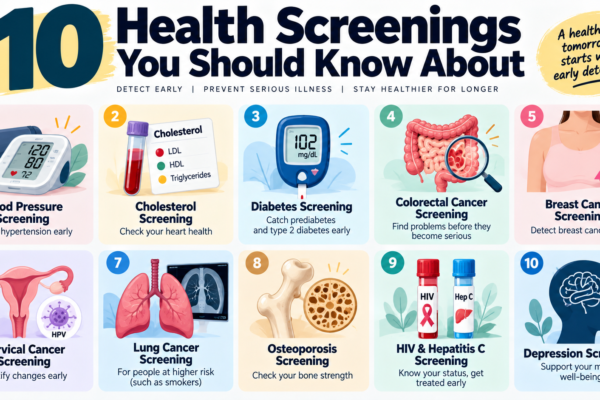
Step 6: Pay attention to preventive healthcare
Age 35 is not a universal trigger for every screening test. Appropriate checks depend on your personal and family history, symptoms, risk factors and local clinical guidelines.
Discuss blood pressure, blood glucose, cholesterol, weight or waist concerns, smoking, sleep and other relevant risks with a healthcare professional.
Do not order broad hormone panels or take hormone treatments simply because you have reached a particular birthday. Testing should be guided by symptoms and clinical context.
10. Frequently Asked Questions
Does your metabolism slow down at 35?
Not necessarily. A large 2021 study found that daily energy expenditure adjusted for fat-free mass remained broadly stable between approximately ages 20 and 60. Individual calorie needs can still change with body size, body composition, activity and health.
Do you start losing muscle after 35?
Muscle performance can begin declining gradually from early adulthood, but the rate varies. Resistance training, adequate nutrition and regular physical activity can help maintain or increase muscle strength and mass.
Does testosterone drop sharply after 35?
There is no universal, sudden drop at 35. Testosterone may decline gradually in men, but individual levels vary and can be influenced by health, sleep, medications and other factors. Symptoms suggesting deficiency should be assessed clinically.
Why is belly fat more common in your late 30s and 40s?
Changes in activity, body composition, sleep, diet and hormones can all contribute. Aging may influence fat distribution, but abdominal fat gain is not inevitable, and no exercise can selectively burn fat from the stomach alone.
Do you need more rest days after 35?
Not automatically. Recovery needs depend on training intensity, volume, fitness, sleep, nutrition and health. Adjust your schedule according to how you perform and feel, rather than following an arbitrary age-based rule.
Can you build muscle after 40?
Yes. Adults can gain muscle and strength beyond their 30s and 40s through progressive resistance training, adequate nutrition and consistent practice.
Is turning 35 considered old?
No. Thirty-five is not a biological cliff. It is a useful milestone for building sustainable habits and paying attention to health, but people of the same age can differ considerably in strength, fitness, body composition and health status.
The Bottom Line: Your Body at 35 Is Not Past Its Prime
Turning 35 does not mean your metabolism suddenly slows, your hormones collapse or your ability to build muscle disappears.
Some physiological changes develop gradually across adulthood, and age-related declines in muscle function and changes in body composition become increasingly relevant over time. But lifestyle, medical conditions, genetics and individual circumstances influence how these changes affect you.
The most useful response is not to fight your age with extreme diets, unproven supplements or unnecessary hormone treatments. It is to invest in the fundamentals: strength training, cardiovascular activity, nutritious food, good sleep, recovery and appropriate healthcare.
Your 35th birthday is not a deadline. It is an opportunity to build habits that help your body serve you well for the next several decades.