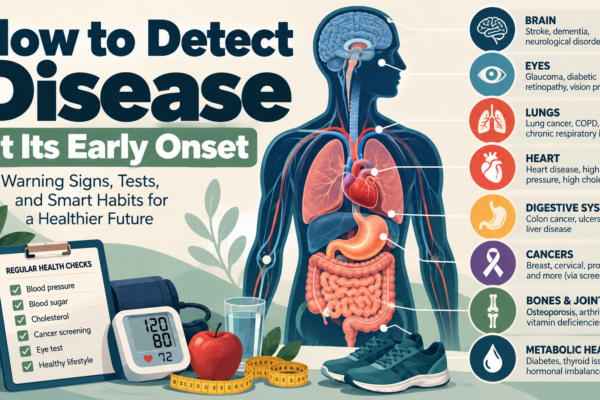
You can feel completely healthy and still have a condition that deserves attention.
High blood pressure often has no symptoms. High cholesterol can go unnoticed for years. Prediabetes may not make you feel sick. Some cancers can also be detected through screening before symptoms appear.
That is why preventive health screenings matter.
But there is an important distinction between screening and simply ordering every medical test you can find. Good preventive care means getting the right screening based on your age, sex, medical history, family history and risk factors.
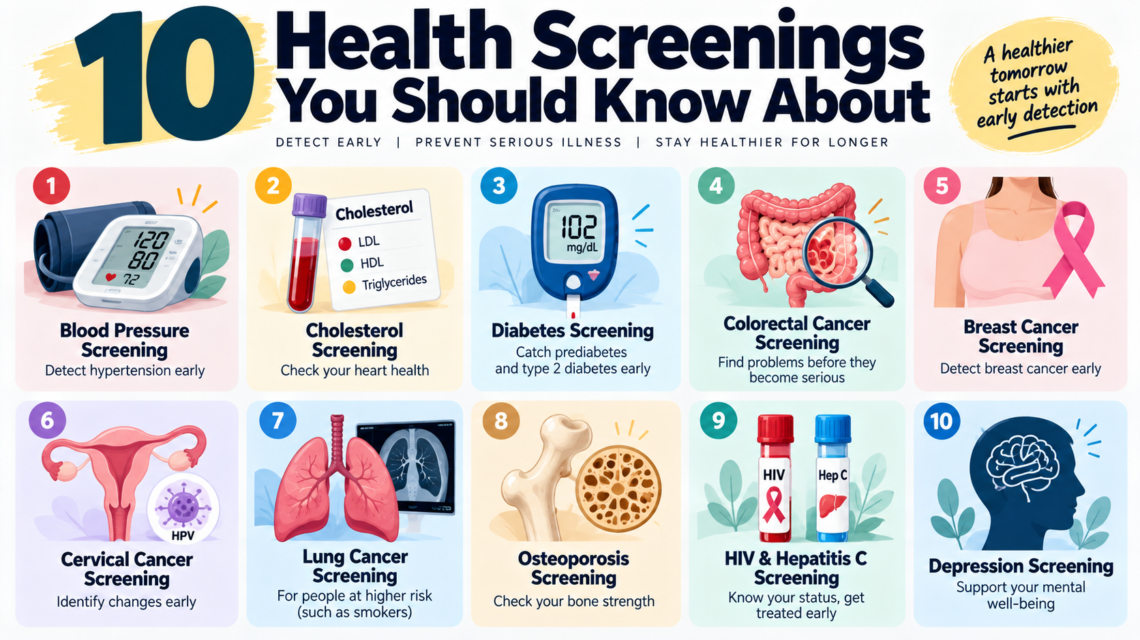
Here are 10 important health screenings to know about if you live in the U.S.
1. Blood Pressure Screening
What it checks: High blood pressure, also called hypertension.
Who should get it: Adults age 18 and older.
High blood pressure is one of the most important health conditions to detect early because it can damage the heart, brain, kidneys and blood vessels without causing obvious symptoms.
The U.S. Preventive Services Task Force recommends screening adults 18 and older for hypertension. If a high reading is found in a doctor’s office, measurements outside the clinical setting, such as home or ambulatory monitoring, should be used to confirm the diagnosis before treatment is started.
For adults 40 and older, or younger adults at increased risk, the USPSTF suggests more frequent screening, often annually. Adults 18 to 39 who are not at increased risk and have previously normal readings may need screening less frequently.
Why it matters
Untreated hypertension increases the risk of:
- Heart attack
- Stroke
- Heart failure
- Kidney disease
- Other cardiovascular problems
A blood pressure check is quick, inexpensive and widely available.
2. Cholesterol Screening
What it checks: Blood levels of cholesterol and related lipids.
A cholesterol test, usually called a lipid panel, can measure:
- LDL cholesterol
- HDL cholesterol
- Triglycerides
- Total cholesterol
High cholesterol usually doesn’t cause symptoms. A blood test is the only way to know whether your cholesterol is elevated.
The CDC says most healthy adults should have their cholesterol checked every 4 to 6 years, while people with heart disease, diabetes or a family history of high cholesterol may need testing more often.
Why it matters
Cholesterol levels are one part of your overall cardiovascular risk.
Your doctor may combine your cholesterol results with factors such as:
- Age
- Blood pressure
- Smoking
- Diabetes
- Other medical conditions
- Family history
For some adults ages 40 to 75 with cardiovascular risk factors, these measurements may help determine whether cholesterol-lowering medication such as a statin could reduce future cardiovascular risk.
3. Prediabetes and Type 2 Diabetes Screening
What it checks: Whether your blood sugar is in the normal range, in the prediabetes range or in the diabetes range.
Type 2 diabetes can develop gradually, and some people don’t notice obvious symptoms in the early stages.
The USPSTF recommends screening adults 35 to 70 years old who have overweight or obesity for prediabetes and type 2 diabetes.
Screening can involve tests such as:
- A1C
- Fasting blood glucose
- Oral glucose tolerance testing
Your doctor can determine which test is appropriate.
Why it matters
Identifying prediabetes can provide an opportunity to make lifestyle changes before diabetes develops.
The USPSTF recommends that people diagnosed with prediabetes be offered or referred to effective preventive interventions.
People with certain risk factors may need screening earlier or at different intervals. Risk factors can include family history, previous gestational diabetes and certain medical conditions.
4. Colorectal Cancer Screening
What it checks: Signs of colorectal cancer or precancerous growths.
For adults at average risk, the USPSTF recommends colorectal cancer screening beginning at age 45.
Adults ages 45 to 75 should generally be screened, while screening from ages 76 to 85 should be individualized based on factors such as overall health, previous screening and personal preferences.
You have several options.
Stool-based tests
These can include:
- Annual fecal immunochemical testing, or FIT
- Annual high-sensitivity guaiac fecal occult blood testing
- Stool DNA-FIT every 1 to 3 years
Visual examinations
Options include:
- Colonoscopy
- CT colonography
- Flexible sigmoidoscopy
The recommended interval depends on which test you use.
Why it matters
Colorectal cancer can develop from precancerous growths, making screening particularly valuable.
And you don’t necessarily need to start with a colonoscopy. Several evidence-based screening options are available.
People with a strong family history, previous polyps, inflammatory bowel disease or certain genetic conditions may need a different screening strategy.
5. Breast Cancer Screening
What it checks: Signs of breast cancer before symptoms develop.
For women at average risk, the USPSTF recommends mammography every two years from ages 40 through 74.
The recommendation applies to cisgender women and other people assigned female at birth, including transgender men and nonbinary people, who are at average risk.
Why it matters
Screening mammography can detect breast cancer earlier, when treatment may be more effective.
However, people with certain risk factors may need a different approach.
Talk to your healthcare professional if you have:
- A strong family history of breast cancer
- A known genetic mutation associated with breast cancer
- Previous breast cancer
- Certain previous radiation treatments
- Other factors that increase breast cancer risk
Your screening schedule should be personalized if you are at higher-than-average risk.
6. Cervical Cancer Screening
What it checks: Changes in cervical cells and infection with high-risk types of human papillomavirus, or HPV.
For average-risk women, the USPSTF recommends cervical cancer screening from ages 21 through 65. The specific test and frequency depend on age.
For ages 21 to 29:
Cervical cytology, commonly called a Pap test, every 3 years.
For ages 30 to 65, options include:
Pap test every 3 years
or
High-risk HPV testing every 5 years
or
HPV testing combined with cytology every 5 years.
Why it matters
Cervical cancer often develops gradually through precancerous changes.
Screening can identify these changes before they become cancer.
People with a history of cervical cancer, high-grade precancerous lesions or certain immune conditions may need a different screening schedule.
7. Lung Cancer Screening
This screening is particularly important for people with a significant smoking history.
What it checks: Early signs of lung cancer using low-dose computed tomography, or LDCT.
The USPSTF recommends annual low-dose CT screening for adults who:
- Are ages 50 to 80
- Have at least a 20 pack-year smoking history
- Currently smoke or quit within the past 15 years
A pack-year is a way of measuring cumulative cigarette exposure.
For example:
1 pack per day for 20 years = 20 pack-years.
2 packs per day for 10 years = 20 pack-years.
Screening generally stops once someone has not smoked for 15 years or develops a health condition that substantially limits life expectancy or the ability to undergo curative lung surgery.
Important
A standard chest X-ray is not the recommended screening test for lung cancer in this high-risk population.
And lung cancer screening is not recommended for everyone.
8. Osteoporosis Screening
What it checks: Low bone density and osteoporosis.
Osteoporosis can develop silently until a fracture occurs.
The USPSTF recommends screening:
- Women age 65 and older
- Postmenopausal women younger than 65 who are at increased risk, based on clinical risk assessment
The primary screening test is generally a DXA bone density scan, sometimes combined with fracture-risk assessment.
What about men?
The USPSTF currently says there isn’t enough evidence to determine whether routine osteoporosis screening provides more benefit than harm in men.
That doesn’t mean men can never need bone-density testing.
A doctor may recommend testing based on individual risk factors or medical conditions.
9. HIV and Hepatitis C Screening
These are two important infectious-disease screenings that many people don’t think about.
HIV screening
The USPSTF recommends HIV screening for adolescents and adults ages 15 to 65, with testing also recommended for younger or older people who have increased risk. Pregnant people should also be screened.
A person can have HIV without obvious symptoms, so testing can identify infection earlier.
Hepatitis C screening
The USPSTF recommends screening asymptomatic adults ages 18 to 79 for hepatitis C. Pregnant adults should also be screened.
Hepatitis C can cause chronic liver disease without obvious symptoms for years.
Why these tests matter
Early identification can allow appropriate treatment and reduce the risk of complications.
Testing frequency can vary depending on individual risk factors.
10. Depression Screening
Health screening isn’t limited to blood tests and imaging.
Mental health deserves preventive attention too.
The USPSTF recommends screening adults for depression, including pregnant and postpartum people and adults age 65 and older.
Screening commonly involves a short questionnaire that asks about things such as:
- Mood
- Interest in activities
- Sleep
- Energy
- Appetite
- Concentration
- Feelings of hopelessness
A screening questionnaire does not by itself diagnose depression.
A positive result should lead to further evaluation and, when appropriate, treatment or support.
Why it matters
Depression can affect:
- Work
- Relationships
- Sleep
- Appetite
- Physical health
- Motivation
- Quality of life
Recognizing it early can make it easier to get appropriate support.
Quick Guide: Which Screenings Apply to You?
| Screening | Typical starting point | How often? |
|---|---|---|
| Blood pressure | Adults 18+ | Depends on age and risk |
| Cholesterol | Adults, with timing based on risk | Often every 4 to 6 years for healthy adults |
| Diabetes | Ages 35 to 70 with overweight/obesity | Depends on results and risk |
| Colorectal cancer | Age 45 | Depends on screening method |
| Breast cancer | Women ages 40 to 74 | Every 2 years for average risk |
| Cervical cancer | Women ages 21 to 65 | Depends on test and age |
| Lung cancer | High-risk smokers ages 50 to 80 | Annually |
| Osteoporosis | Women 65+ or younger postmenopausal women at increased risk | Based on risk and results |
| HIV | Ages 15 to 65 | Depends on risk |
| Hepatitis C | Adults 18 to 79 | At least once for most adults, with additional testing based on risk |
| Depression | Adults | Based on clinical care and circumstances |
These are general U.S. recommendations, not personalized medical advice. Your actual screening schedule can differ based on your health history, medications, family history, previous test results and other risk factors.
You Don’t Need Every Test Every Year
One of the biggest misconceptions about preventive healthcare is that a comprehensive checkup means getting dozens of blood tests and scans every year.
That’s not necessarily the case.
Some tests are useful at specific ages.
Some are recommended only for people with certain risk factors.
Others may cause more harm than benefit when performed routinely in people at low risk.
For example, the USPSTF recommends annual lung cancer screening only for a defined high-risk group based primarily on age and cumulative smoking exposure.
Similarly, osteoporosis screening recommendations differ substantially by sex, age and risk.
The goal isn’t to test for everything.
The goal is to identify the conditions you’re most likely to benefit from detecting early.
What About a Full-Body Health Checkup?
Commercial “full-body checkups” often bundle together large numbers of tests.
That may sound reassuring, but more testing isn’t automatically better.
An unexpected result can lead to:
- Repeat testing
- Unnecessary imaging
- Specialist appointments
- Invasive procedures
- Anxiety
- Additional costs
Some screening tests are extremely useful when targeted at the right population but have limited value when performed indiscriminately.
Instead of asking:
“What tests can I take?”
ask your doctor:
“Based on my age, family history and risk factors, which preventive screenings should I have?”
That’s a much more useful question.
What If You Have Symptoms?
Screening is designed primarily for people without symptoms.
If you already have concerning symptoms, don’t wait until your next routine screening.
For example, symptoms such as:
- Blood in your stool
- Unexplained weight loss
- A new or changing lump
- Persistent chest pain
- Unexplained bleeding
- Difficulty breathing
- Persistent vomiting
- A significant change in bowel habits
- A persistent cough
- Severe or worsening pain
may require diagnostic evaluation rather than routine screening.
Screening and diagnosis are not the same thing.
Keep a Personal Preventive Health Calendar
A simple health calendar can make preventive care much easier.
Keep track of:
Blood pressure:
Record important readings if your healthcare professional recommends monitoring at home.
Blood tests:
Keep copies of cholesterol, glucose and other important results.
Cancer screening:
Record mammograms, Pap/HPV tests, colorectal screening and other relevant tests.
Vaccinations:
Keep your vaccination record current.
Family history:
Update it when relatives receive significant diagnoses.
Medications:
Review them periodically with your healthcare professional.
This gives you a much clearer picture of your health history over time.
The Bottom Line
Health screening isn’t about finding something wrong with you every year.
It’s about finding the right problems at the right time.
For many adults, that means keeping an eye on blood pressure and cholesterol, screening for diabetes when appropriate, and staying up to date with recommended cancer screenings. Depending on age, sex and risk factors, HIV, hepatitis C, osteoporosis and depression screening may also be important.
Your screening needs will change as you get older.
A 25-year-old and a 65-year-old shouldn’t have the same preventive-care checklist.
The smartest approach is to review your screening needs periodically with a healthcare professional and base them on age, risk factors, family history, previous results and current medical guidelines.
Early detection can be valuable, but the best preventive healthcare isn’t about getting the most tests.
It’s about getting the tests that have the greatest potential benefit for you.