Scroll through Instagram or TikTok for five minutes, and you might come away believing that being fit means having visible abs, broad shoulders, a tiny waist, and the ability to run a marathon before breakfast.
Walk into a gym, and the definition might change. Being fit could mean lifting twice your body weight, running a seven-minute mile, or completing a high-intensity workout without stopping.
But what about someone who walks every day, has good stamina, can carry groceries without struggling, sleeps well, and can play with their kids without feeling completely exhausted? What about a person with a larger body who is strong, active, and physically capable?
Are they fit, too?
The answer is yes. Fitness is not a single body type, weight, or athletic achievement. It is a collection of physical abilities that help you perform everyday activities, respond to physical demands, and maintain your health.
Understanding what fitness actually means can help you set more useful goals, avoid misleading comparisons, and build a healthier relationship with exercise.
1. Being Fit Does Not Necessarily Mean Looking Fit
One of the biggest misconceptions about fitness is that you can judge it by appearance alone.
Visible abs, muscular arms, and a lean physique may reflect certain training and nutritional habits, but they do not tell the whole story about someone’s cardiovascular health, strength, mobility, blood pressure, endurance, or overall well-being.
Body composition is influenced by several factors, including genetics, age, hormones, diet, and physical activity. Two people can look very different and still have comparable levels of fitness in some areas.
Likewise, someone with a muscular physique may have excellent strength but limited cardiovascular endurance. A lean person may struggle with lifting, balance, or sustained physical activity. Neither appearance tells you everything you need to know.
This does not mean body composition is irrelevant to health. Excess body fat, particularly when it contributes to metabolic or cardiovascular risk, can matter. But body weight alone is an incomplete measure of fitness.
The takeaway: Instead of asking whether someone looks fit, ask what their body can do and how well it functions.
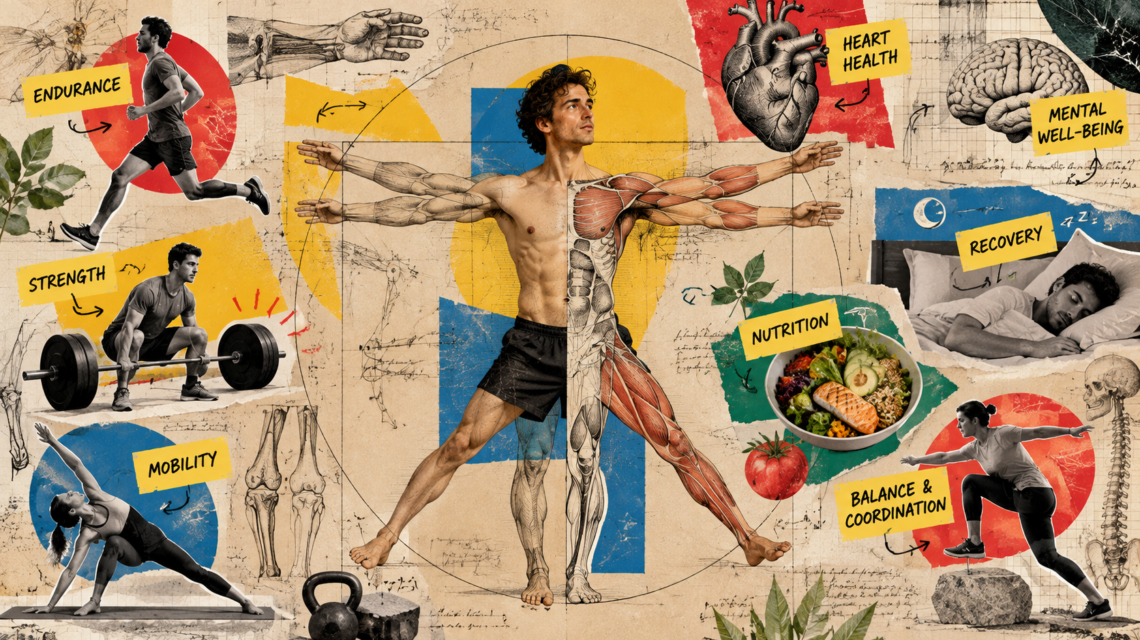
2. Real Fitness Has Seven Important Components
Fitness is multidimensional. You do not have to be exceptional in every area, but understanding these components gives you a much clearer picture of what it means to be physically fit.
1. Cardiovascular endurance: Can your heart and lungs keep up?
Cardiovascular endurance is your ability to sustain physical activity while your heart, lungs, and circulatory system deliver oxygen to working muscles.
It matters when you walk uphill, climb several flights of stairs, ride a bike, swim, or chase a child around the park.
Signs that your cardiovascular fitness is improving may include:
- Walking briskly for longer without needing to stop.
- Recovering more comfortably after climbing stairs.
- Maintaining a steady pace during a walk, jog, or bike ride.
- Being able to exercise for longer at a similar level of effort.
Activities such as brisk walking, cycling, swimming, dancing, and jogging can help improve cardiovascular endurance.
You do not need to run a marathon. Being able to walk briskly for 30 minutes without feeling completely depleted is a meaningful achievement, especially if you are starting from a sedentary lifestyle.
2. Muscular strength: Can you produce force when you need to?
Strength is not just about how much you can bench press. It is also about whether you can lift a suitcase, carry groceries, move furniture safely, or pick something up from the floor.
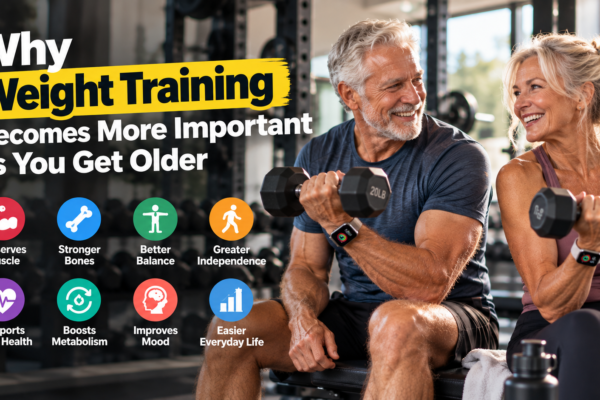
Muscular strength helps support everyday independence and can become increasingly important as you age.
You can develop strength through weight training, resistance bands, bodyweight exercises, and other activities that challenge your muscles.
Useful movements include squats, rows, push-ups, hip hinges, and presses, adapted to your ability and experience.
The goal is not necessarily to lift the heaviest weight in the gym. It is to become stronger relative to your own starting point and the demands of your life.
3. Muscular endurance: Can your muscles keep working?
Strength and muscular endurance are related, but they are not the same.
Strength describes how much force you can produce. Muscular endurance describes your ability to repeat a movement or sustain muscular effort over time.
For example, someone might be able to lift a heavy weight once but struggle to perform several repetitions. Another person may use a lighter weight and complete many controlled repetitions.
Muscular endurance matters when carrying shopping bags, doing yardwork, cleaning your home, hiking, or maintaining good posture during everyday activities.
Resistance training can improve both strength and endurance, depending on how you structure your workouts.
4. Mobility and flexibility: Can you move comfortably?
Being fit also means being able to move your body through the ranges of motion needed for daily life.
Can you reach overhead without significant discomfort? Can you squat down to pick something up? Can you turn your body, step over an obstacle, or get down to the floor and back up with reasonable control?
Flexibility refers to the range of motion available at a joint or through a muscle group. Mobility is a broader concept that includes using that range of motion with control.
Both can contribute to comfortable movement, although greater flexibility is not automatically better for every person or activity.
Walking, strength training through comfortable ranges of motion, yoga, and targeted mobility exercises can all help.
You do not need to touch your toes or perform the splits to be fit. The practical goal is to move well enough for your daily activities and chosen sports.
5. Balance and coordination: Can you control your body?
Balance and coordination are easy to overlook when you’re young or spend most of your time in familiar environments. But they matter when walking on uneven ground, climbing stairs, changing direction during sports, or recovering from a stumble.
These abilities become especially important with age because falls can lead to serious injuries and loss of independence.
Activities such as single-leg balance exercises, tai chi, dance, and appropriately challenging strength exercises can help develop balance and body control.
You do not have to perform advanced athletic movements. Simply being able to walk confidently, change direction, and manage everyday obstacles is valuable.
6. Recovery: Can you bounce back from physical effort?
A fitness routine should challenge your body, but it should also allow you to recover.
Recovery involves more than whether your muscles feel sore. It includes sleep, energy levels, the ability to perform subsequent workouts, and whether exercise is interfering with normal daily functioning.
Some muscle soreness can occur after unfamiliar or demanding exercise. However, persistent exhaustion, worsening performance, recurring injuries, or pain that does not settle may suggest that your routine needs adjustment or that you should seek professional advice.
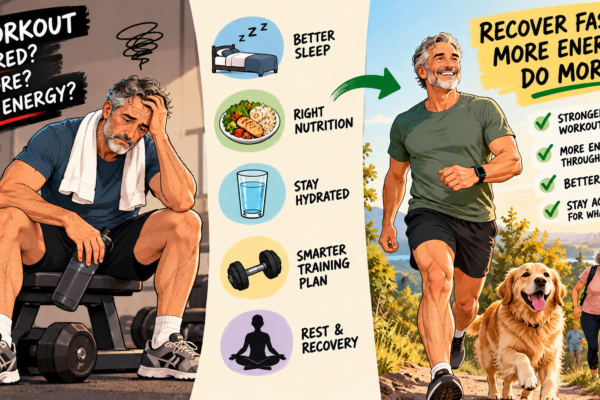
Sleep, sufficient nutrition, hydration, rest days, and gradual increases in training load all support recovery.
Being fit does not mean being exhausted all the time. A sustainable routine should help you build capacity over weeks and months, not leave you perpetually depleted.
7. Metabolic and cardiovascular health: What is happening beneath the surface?
Fitness is not only about performance. Physical activity also supports health processes that you cannot see in the mirror.
Regular activity can help improve blood pressure, insulin sensitivity, blood glucose regulation, cholesterol-related risk factors, and mental well-being. It is also associated with a lower risk of several chronic diseases.
These outcomes are influenced by many factors, including genetics, diet, sleep, medications, age, and existing medical conditions. Exercise is powerful, but it is not a guarantee against illness.
Measures such as blood pressure, blood glucose or A1C when appropriate, and blood lipids can provide useful health information alongside fitness assessments.
A person may become stronger and more aerobically fit even if their weight changes very little. That progress still matters.
3. How Fit Do You Actually Need to Be?
Here’s where the conversation becomes practical.
You do not need to train like a professional athlete to achieve meaningful health benefits. The U.S. Centers for Disease Control and Prevention (CDC) recommends that adults aim for at least 150 minutes of moderate-intensity aerobic activity each week, or 75 minutes of vigorous activity, or an equivalent combination, along with muscle-strengthening activity on at least two days per week. Some people may benefit from more activity, depending on their goals and circumstances. <a href=”https://www.cdc.gov/physical-activity-basics/adding-adults/“>CDC adult physical activity guidance</a>.
That might look like this:
| Activity | Example |
|---|---|
| Cardio | A 30-minute brisk walk, five days a week |
| Strength | Two full-body resistance-training sessions each week |
| Mobility | Short, regular sessions targeting areas that feel restricted |
| Daily movement | Taking walking breaks, using stairs, gardening, or walking the dog |
| Recovery | Getting sufficient sleep and allowing time between demanding workouts |
These are general targets, not a pass-or-fail test. If you currently do very little activity, starting with 5–10 minutes of walking and building gradually is a sensible first step.
The CDC emphasizes that some physical activity is better than none, and activity can be accumulated in manageable chunks. <a href=”https://www.cdc.gov/physical-activity-basics/adding-adults/what-counts.html“>See what counts as physical activity</a>.
The point is to build a routine that you can sustain, not to hit every target perfectly from day one.
4. How Can You Tell Whether You’re Getting Fitter?
The scale is only one measurement, and it may not be the most useful one for every goal.
Instead, look for changes in performance, comfort, consistency, and relevant health indicators.
Here are six practical ways to track progress without obsessing over your appearance.
1. Your walking capacity improves. You can walk farther, climb hills more comfortably, or maintain a brisk pace without stopping as often.
2. Everyday tasks feel easier. Carrying groceries, lifting luggage, climbing stairs, or doing household chores takes less effort.
3. Your strength increases. You can perform more controlled repetitions, use a slightly heavier resistance, or complete a movement that once felt difficult.
4. Your recovery improves. You feel more prepared for your next workout, and ordinary activity leaves you less fatigued.
5. Your balance and movement control improve. You feel steadier on stairs, during recreational sports, or when moving on uneven surfaces.
6. Your health indicators improve where applicable. Your healthcare professional may observe improvements in blood pressure, blood glucose, blood lipids, or other relevant measurements.
For a simple comparison, choose one or two repeatable activities—such as a comfortable walking route or a particular strength exercise—and record how they feel over time. Repeat them under reasonably similar conditions.
Do not turn every workout into a test. Consistency over months is generally more informative than one unusually good or bad day.
5. Can You Be Fit If You’re Overweight?
Yes. Body weight and physical fitness are related, but they are not interchangeable.
A person can have a higher body weight and still develop substantial cardiovascular endurance, strength, mobility, and exercise capacity. Research and U.S. physical activity guidance also recognize that many benefits of physical activity occur independently of changes in body weight. <a href=”https://www.cdc.gov/physical-activity/media/pdfs/Physical_Activity_Guidelines_2nd_edition.pdf“>Physical Activity Guidelines for Americans</a>.
At the same time, excess body fat can increase the risk of certain health conditions for some people. Fitness should not be used to dismiss those risks, just as body weight should not be used to dismiss someone’s physical abilities.
If weight management is one of your goals, exercise can help support it, preserve muscle during weight loss, and improve health even when the scale moves slowly. Nutrition, sleep, medications, genetics, and other factors can influence weight as well.
A better approach is to work on fitness and health together rather than waiting until you reach a particular weight to consider yourself fit.
If you have joint pain, significant mobility limitations, or a chronic health condition, a clinician or qualified exercise professional can help you find appropriate starting activities.
6. Do You Need to Go to the Gym to Be Fit?
No. A gym can provide useful equipment and structure, but it is not a requirement for fitness.
You can improve your health and physical capacity through a combination of walking, cycling, home workouts, resistance bands, bodyweight exercises, swimming, dancing, and recreational sports.
For example, a beginner could start with:
- Brisk walks around the neighborhood.
- Chair squats or sit-to-stands.
- Wall push-ups.
- Resistance-band rows.
- Gentle mobility work.
- Gradually longer walks or more challenging exercises as capacity improves.
The best activity is one that fits your health, ability, budget, schedule, and preferences well enough that you will keep doing it.
For some people, a gym provides accountability. Others prefer exercising at home or outdoors. Neither choice is inherently superior.
7. The Difference Between Being Fit and Being an Athlete
Athletes train for specific performance demands. A competitive runner may prioritize speed and endurance, while a powerlifter focuses heavily on maximal strength. A gymnast may emphasize balance, coordination, flexibility, and explosive power.
General fitness is broader. It aims to support a range of physical demands and everyday health, rather than maximizing performance in one sport.
This distinction matters because being excellent at one physical task does not necessarily mean being equally capable in every other area.
A marathon runner may have exceptional endurance but comparatively less upper-body strength. A powerlifter may be extraordinarily strong but not particularly trained for long-distance running.
Both may be very fit for their chosen activities.
For most people, a balanced approach to aerobic activity, resistance training, movement quality, and recovery is more useful than trying to become exceptional at one measure.
8. The Fitness Traps That Can Hold You Back
If your goal is to become healthier and more capable, watch out for these common mistakes.
Chasing appearance instead of ability. Aesthetic goals are personal, but they do not measure every aspect of health or performance.
Doing only cardio. Walking and running are valuable, but adults should also include muscle-strengthening activity.
Lifting weights while ignoring cardiovascular health. Strength matters, but so does the ability to sustain physical activity.
Treating soreness as proof of progress. You can have a productive workout without being sore the next day.
Doing too much too soon. Rapid increases in exercise volume or intensity can make injuries and burnout more likely.
Ignoring sleep and recovery. Training is only one part of the process. Your body also needs time and resources to adapt.
Comparing your progress with someone else’s. Age, starting point, health history, genetics, and available time all influence progress.
Believing that one missed workout ruins everything. A missed session is a normal part of life. Returning to your routine matters more than maintaining a perfect streak.
9. A Simple Four-Week Plan to Start Becoming Fitter
If you are starting from a low activity level, you do not need an elaborate training split or an expensive fitness tracker. Begin with a manageable routine and adjust it to your current ability.
| Week | Cardio | Strength | Main goal |
|---|---|---|---|
| 1 | Short, comfortable walks on several days | One or two light sessions | Establish a routine |
| 2 | Gradually add walking time | Two sessions if recovery allows | Improve consistency |
| 3 | Include a few slightly brisker intervals if comfortable | Practice controlled full-body movements | Build capacity |
| 4 | Continue progressing toward weekly activity guidelines | Maintain two sessions | Review progress and adjust |
This is a flexible starting framework, not a prescription. Some people may need to progress more slowly, while others may already be able to do more.
For strength sessions, consider movements that cover the major muscle groups: a squat or sit-to-stand, a push, a pull, a hip-hinge movement, and a simple core exercise. Start with a level of resistance that allows controlled technique.
If you have been inactive for a long time, have a chronic condition, or are unsure which activities are safe for you, ask a healthcare professional for guidance before substantially increasing your exercise intensity.
At the end of four weeks, assess what has become easier. Can you walk longer? Have you completed more workouts? Do everyday tasks feel less tiring? Those changes are meaningful signs of progress.
The Bottom Line: Fitness Is About What Your Body Can Do for You
Being fit does not require six-pack abs, a marathon medal, or a gym membership. It means developing the strength, endurance, mobility, balance, and overall physical capacity to meet the demands of your life.
For one person, that might mean running a half-marathon. For another, it might mean climbing stairs without stopping, carrying groceries comfortably, playing with their children, or maintaining independence as they get older.
Those goals can all be worthwhile.
Instead of asking, “Do I look fit?” try asking: “Am I becoming stronger, moving more comfortably, building endurance, recovering well, and supporting my long-term health?”
That is a much more useful definition of fitness—and one that gives almost everyone a place to start.
Frequently Asked Questions
1. What is the simplest definition of being fit?
Being fit means having the physical capacity to perform daily activities and chosen physical challenges with reasonable strength, endurance, coordination, and control, while supporting overall health.
2. Can you be fit without having abs?
Absolutely. Visible abs depend on factors such as body fat distribution, genetics, and nutrition. They are not a requirement for good cardiovascular endurance, strength, mobility, or health.
3. How much exercise do adults need to be fit?
U.S. guidelines recommend at least 150 minutes of moderate-intensity aerobic activity or 75 minutes of vigorous activity each week, plus muscle-strengthening activity on at least two days. Individual needs and appropriate starting levels vary.
4. Is walking enough to get fit?
Walking is an excellent way to improve activity levels and cardiovascular fitness, especially for beginners. For a more balanced routine, add muscle-strengthening exercises and other activities suited to your needs.
5. Can you be fit and still have a higher body weight?
Yes. Fitness cannot be determined by body weight alone. A higher weight may be relevant to certain health risks, but it does not prevent someone from improving strength, endurance, mobility, and physical function.
6. How long does it take to become fit?
It depends on your starting point, training routine, health, and goals. Some people notice improvements in energy or exercise tolerance within a few weeks, while larger changes in strength and endurance generally require continued training over time.
7. What is more important: cardio or strength training?
Both serve important purposes. Cardiovascular activity supports endurance and heart health, while strength training helps develop and maintain muscle and physical function. A balanced routine includes both when possible.
Sources and Further Reading
- CDC — Adding Physical Activity as an Adult
- CDC — What Counts as Physical Activity for Adults?
- U.S. Department of Health and Human Services — Physical Activity Guidelines for Americans
This article is for general educational purposes and does not replace individualized medical advice.