Walk through almost any American grocery store and you’ll find them everywhere.
Breakfast cereals. Protein bars. Frozen meals. Flavored yogurt. Chips. Packaged bread. Soda. Instant noodles. Cookies. Chicken nuggets. Sweetened drinks.
Some of these foods are obvious junk food. Others are marketed as healthy, high-protein, low-fat, organic, gluten-free or even “natural.”
So what exactly makes a food ultra-processed?
And should you actually be worried about eating it?
The answer is more complicated than simply looking for a long ingredient list.
A growing body of research has linked diets high in ultra-processed foods with a range of health problems, including obesity, type 2 diabetes, cardiovascular disease and higher mortality. At the same time, researchers continue to debate exactly why these foods may be harmful and whether every food classified as ultra-processed carries the same level of risk.
Here’s what you need to know.
What Are Ultra-Processed Foods?
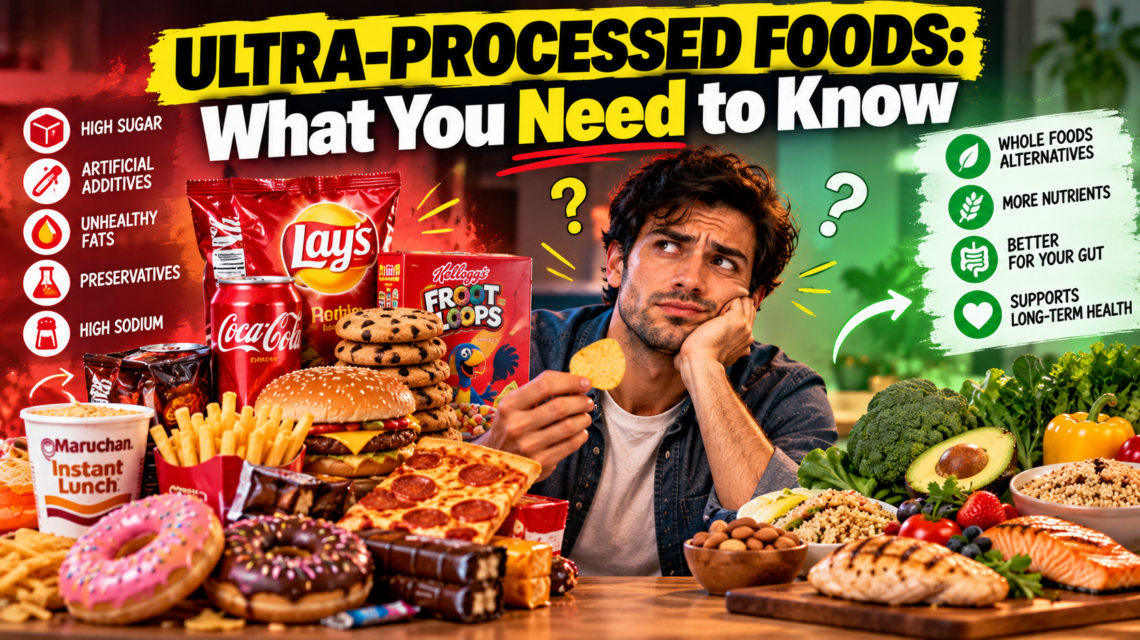
Ultra-processed foods, often abbreviated as UPFs, are foods that have undergone extensive industrial processing and typically contain ingredients or additives that are uncommon in a home kitchen.
The term comes largely from the NOVA food classification system, which categorizes foods according to the extent and purpose of processing.
Ultra-processed foods can include products made using ingredients such as:
- High-fructose corn syrup
- Refined starches
- Hydrogenated or modified oils
- Protein isolates
- Artificial or natural flavorings
- Emulsifiers
- Sweeteners
- Colors
- Stabilizers
- Thickeners
- Preservatives
Examples include packaged snacks, sugary drinks, instant noodles, many frozen meals, candy, some breakfast cereals, processed meat products and many packaged desserts.
But there’s an important distinction:
Processed does not automatically mean unhealthy.
Processing is an extremely broad term.
Cooking vegetables is processing. Freezing fruit is processing. Pasteurizing milk is processing. Canning beans is processing.
The concern around ultra-processed foods is about a particular category of heavily formulated industrial foods, not every food that comes in a package.
Ultra-Processed vs. Processed vs. Minimally Processed
It helps to think about foods on a spectrum.
Minimally processed foods
These are foods that have been cleaned, cut, frozen, dried or otherwise altered without fundamentally turning them into a formulated product.
Examples:
- Frozen vegetables
- Fresh fruit
- Frozen berries
- Plain oats
- Eggs
- Plain yogurt
- Nuts
- Fresh or frozen meat
- Rice
These foods can still be nutritious even though they have undergone some processing.
Processed foods
These are often made by adding ingredients such as salt, sugar or oil to relatively recognizable foods.
Examples can include:
- Canned vegetables
- Cheese
- Canned fish
- Pickles
- Some breads
- Tomato sauce
Again, processing itself isn’t necessarily the problem.
Ultra-processed foods
These are generally industrial formulations made using multiple ingredients, processing techniques and additives.
Examples include:
- Soda
- Candy
- Many packaged cookies
- Chips
- Instant noodles
- Some frozen dinners
- Sugary breakfast cereals
- Many packaged snack cakes
- Some processed meat products
- Sweetened packaged drinks
The boundaries aren’t always perfect. Researchers have also pointed out that NOVA is a broad classification system and that foods within the same category can have very different nutritional profiles.
Why Are Ultra-Processed Foods a Concern?
One reason scientists are paying attention is that people who consume more ultra-processed food tend to have higher rates of several chronic health conditions.
A major 2024 umbrella review published in The BMJ examined 45 pooled analyses involving nearly 9.9 million participants.
Greater exposure to ultra-processed foods was associated with higher risks across a range of outcomes, including cardiovascular disease, type 2 diabetes, obesity, depression, anxiety and mortality. However, the researchers also noted that the quality of evidence varied substantially across outcomes, with many associations rated low or very low quality.
This distinction matters.
The research shows strong associations, but an association doesn’t automatically prove that ultra-processed foods directly cause every disease linked to them.
People who eat a lot of ultra-processed food may also differ in other ways, including physical activity, smoking, sleep, income, overall diet quality and access to healthier foods.
That’s why researchers continue to investigate the mechanisms behind the associations.
Ultra-Processed Foods May Make It Easier to Overeat
One of the most interesting pieces of evidence comes from a small randomized controlled trial conducted by researchers at the National Institutes of Health.
Twenty adults were given either an ultra-processed diet or a minimally processed diet for two weeks each. The diets were designed to be similar in calories, sugar, fiber, fat and carbohydrates.
Participants were allowed to eat as much or as little as they wanted.
While eating the ultra-processed diet, participants consumed about 500 more calories per day on average and gained about 2 pounds over the two-week period. During the minimally processed diet, they lost approximately the same amount of weight.
The study was small and short, so it doesn’t prove that every ultra-processed food causes weight gain.
But it raised an important possibility:
The way a food is formulated may affect how much people eat.
Participants also ate faster on the ultra-processed diet.
That could matter because foods that are easy to chew, quickly consumed and highly palatable may make it easier to eat more calories before your body has time to register fullness.
Why Are Ultra-Processed Foods So Easy to Overeat?
Several factors may contribute.
1. They’re highly palatable
Many UPFs combine combinations of:
- Fat
- Salt
- Sugar
- Refined carbohydrates
- Flavorings
This can make them extremely appealing.
2. They’re convenient
A frozen meal can go from freezer to plate in minutes.
A snack bar can be eaten while driving.
A bag of chips requires no preparation.
Convenience isn’t inherently bad, but it can make highly processed foods an easy default.
3. They’re often calorie-dense
Some ultra-processed foods pack a large number of calories into a relatively small amount of food.
A person can consume hundreds of calories without feeling like they ate a particularly large meal.
4. They’re easy to eat quickly
Soft breads, chips, cookies, sweetened drinks and other highly processed foods often require little chewing.
Faster eating may make it easier to consume more food before fullness signals catch up.
Are All Ultra-Processed Foods Bad?
This is where things get complicated.
The label ultra-processed covers an enormous range of products.
A sugary soda and a fortified packaged breakfast product might both fall into the UPF category, but that doesn’t mean they have identical nutritional profiles or identical effects on health.
Some packaged foods can also provide useful nutrients.
For example, a fortified product may contain:
- Protein
- Calcium
- Iron
- Vitamins
- Fiber
And some foods classified as ultra-processed may be better choices than other options depending on the person’s circumstances.
This is one reason nutrition researchers increasingly emphasize overall dietary patterns rather than treating the NOVA classification as a simple list of “good” and “bad” foods.
Does a Long Ingredient List Mean a Food Is Unhealthy?
Not necessarily.
An ingredient list with 25 ingredients may deserve a closer look, but ingredient count alone isn’t a reliable measure of healthfulness.
Instead, look at the entire product.
Ask:
- How much added sugar does it contain?
- How much sodium?
- How much saturated fat?
- How much protein?
- How much fiber?
- How calorie-dense is it?
- What is the serving size?
- How often do you eat it?
- What is it replacing in your diet?
A packaged food with a long ingredient list isn’t automatically worse than a food with five ingredients.
What Ingredients Should You Look For?
Certain ingredients commonly appear in ultra-processed products.
You may see things such as:
Sweeteners
- High-fructose corn syrup
- Glucose syrup
- Maltodextrin
- Artificial sweeteners
- Sugar alcohols
Fats and oils
- Hydrogenated oils
- Modified oils
- Refined vegetable oils
Texture and stability ingredients
- Emulsifiers
- Stabilizers
- Thickeners
- Gums
Flavor and appearance
- Artificial flavors
- Natural flavors
- Food colors
Seeing one of these ingredients doesn’t automatically mean the product is dangerous.
The bigger question is what the overall product looks like and how frequently you consume it.
What Are Some Common Ultra-Processed Foods?
You don’t need to memorize hundreds of ingredients.
Start with the obvious categories.
Sugary drinks
Examples include:
- Soda
- Sweetened energy drinks
- Sweetened fruit drinks
- Some flavored coffee beverages
These can deliver large amounts of added sugar or sweeteners without providing much satiety.
Candy and packaged desserts
Examples include:
- Candy bars
- Gummies
- Cookies
- Snack cakes
- Some packaged pastries
These are usually easy to consume quickly and can be high in added sugar and calories.
Chips and packaged snacks
Examples include:
- Potato chips
- Cheese-flavored snacks
- Flavored crackers
- Some packaged popcorn products
Instant noodles
Many instant noodle products are highly processed and can contain significant amounts of sodium.
Some frozen meals
Not every frozen meal is ultra-processed, but many heavily formulated frozen dinners contain multiple additives and can be high in sodium and saturated fat.
Sugary breakfast cereals
Some cereals are heavily formulated and contain substantial amounts of added sugar.
Processed meat products
Some hot dogs, chicken nuggets, meat sticks and other products fall into the ultra-processed category.
This category deserves particular attention because processed meat consumption has independently been associated with health concerns.
What About Protein Bars and Protein Shakes?
This is where things get interesting.
A protein bar can be a convenient way to increase protein intake.
But some products are essentially candy bars with added protein.
Others contain:
- Sugar alcohols
- Added fibers
- Artificial sweeteners
- Emulsifiers
- Multiple syrups
- Refined ingredients
That doesn’t automatically make them unhealthy.
If a protein bar helps you reach your protein target and replaces a less nutritious snack, it may be useful.
But if you’re eating several highly processed protein products every day while barely eating whole foods, it’s worth reconsidering your overall diet.
What About Whole-Grain Bread?
Some packaged breads may be classified as ultra-processed depending on their ingredients and formulation.
That doesn’t mean you should automatically stop eating them.
A whole-grain packaged bread may provide:
- Fiber
- Whole grains
- Protein
- Vitamins and minerals
It may still be a better everyday choice than refined white bread with little fiber.
This illustrates an important limitation of simply labeling foods “ultra-processed.”
Processing level is only one part of the nutrition picture.
What About Yogurt?
Plain yogurt is generally much less processed than a flavored dessert-style yogurt.
But flavored yogurts can contain:
- Added sugar
- Sweeteners
- Flavorings
- Stabilizers
- Thickeners
Instead of automatically avoiding all yogurt, compare labels.
A plain or lightly sweetened yogurt with adequate protein can be a very different nutritional choice from a dessert-style yogurt loaded with added sugar.
How to Eat Less Ultra-Processed Food Without Going Extreme
You don’t have to clean out your entire pantry overnight.
Small changes can make a meaningful difference.
1. Start with beverages
Replacing sugary drinks with:
- Water
- Sparkling water
- Unsweetened tea
- Unsweetened coffee
can be one of the easiest changes.
2. Build meals around basic ingredients
Try making meals around:
Protein + vegetables + high-fiber carbohydrate + healthy fat
For example:
Grilled chicken + vegetables + potatoes + olive oil.
Or:
Salmon + rice + broccoli + avocado.
3. Keep convenient whole foods available
Convenience is one of the biggest advantages of ultra-processed food.
You can fight that by making minimally processed foods convenient too.
Keep foods such as these readily available:
- Eggs
- Fruit
- Greek yogurt
- Nuts
- Frozen vegetables
- Pre-washed greens
- Canned beans
- Canned tuna
- Frozen chicken
- Oatmeal
4. Don’t rely on perfection
If you eat a frozen pizza on Friday night, that doesn’t erase the rest of your diet.
The goal is to improve the overall pattern.
5. Focus on what you can add
Instead of constantly asking:
“What foods should I stop eating?”
also ask:
“What nutritious foods can I add?”
Adding more fruit, vegetables, legumes, whole grains, nuts, seeds and quality protein can naturally reduce the amount of ultra-processed food you eat.
A Simple Grocery Store Test
When you’re standing in front of a shelf, try this:
Step 1: Look at the Nutrition Facts label.
Step 2: Check added sugar, sodium, saturated fat, fiber and protein.
Step 3: Look at the ingredient list.
Step 4: Ask what role the food plays in your diet.
Step 5: Compare it with a less processed alternative.
You don’t need to reject a food simply because you can’t pronounce an ingredient.
Instead, consider the entire nutritional package.
What Should You Eat More Often?
Rather than trying to eliminate every UPF, build your diet around more minimally processed foods.
Good staples include:
Fruits
- Apples
- Bananas
- Berries
- Oranges
- Grapes
- Melons
Vegetables
- Broccoli
- Spinach
- Carrots
- Peppers
- Tomatoes
- Cauliflower
- Green beans
Protein
- Eggs
- Chicken
- Fish
- Lean beef
- Turkey
- Beans
- Lentils
- Tofu
- Plain Greek yogurt
Whole-food carbohydrates
- Oats
- Potatoes
- Sweet potatoes
- Brown rice
- Quinoa
- Whole grains
Healthy fats
- Nuts
- Seeds
- Avocado
- Olive oil
- Natural nut butters
These foods can form the foundation of a healthy diet even if you occasionally eat processed or ultra-processed foods.
Is “Natural” Always Better?
No.
“Natural” is a marketing term in many food contexts, not a guarantee that a product is nutritionally superior.
A food can be natural and still contain a lot of calories, saturated fat or added sugar.
Likewise, a processed food can provide useful nutrients.
That’s why it’s better to look at the actual food and its nutritional profile rather than relying on front-of-package marketing.
Should You Completely Avoid Ultra-Processed Foods?
For most people, an all-or-nothing approach isn’t necessary.
The evidence suggests that eating a diet heavily dominated by ultra-processed foods is associated with poorer health outcomes. But that doesn’t mean eating a packaged snack occasionally is going to damage your health.
A more realistic goal is:
Make minimally processed and whole foods the foundation of your diet, and make ultra-processed foods a smaller part of the overall pattern.
This approach is easier to maintain and doesn’t require obsessively checking every ingredient.
The Bottom Line
Ultra-processed foods are more than just “junk food.”
They are a broad category of industrially formulated foods that can include everything from obvious sweets and sugary drinks to packaged products marketed as healthy.
Research has found strong associations between higher consumption of ultra-processed foods and several adverse health outcomes. A controlled NIH study also found that participants consumed substantially more calories and gained weight while eating an ultra-processed diet compared with a minimally processed diet.
But the science is not as simple as saying “all processed food is bad.”
The healthiest takeaway is to focus on your overall dietary pattern.
Eat more foods that resemble their original ingredients. Prioritize vegetables, fruit, whole grains, legumes, nuts, seeds and quality protein. Use packaged foods when they make life easier, but don’t let them become the foundation of every meal.
You don’t need a perfect diet.
You need a better overall pattern, repeated consistently.