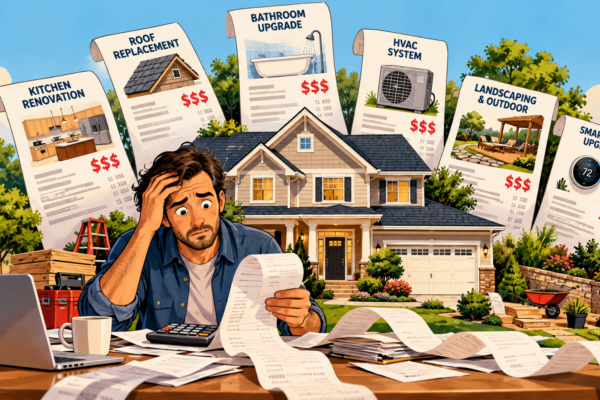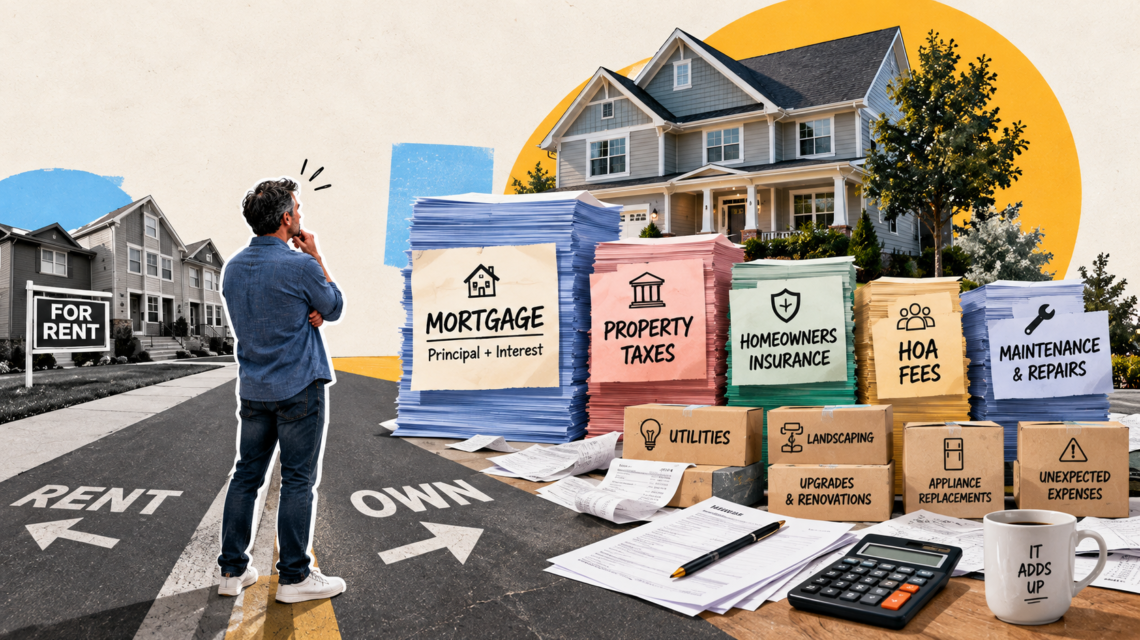
Buying a home is often described as one of the smartest financial decisions an American can make. You build equity, gain more control over your living space, and potentially benefit from rising property values over time.
But there’s one part of homeownership that doesn’t always get enough attention: the actual cost of keeping a home.
Your mortgage payment may be predictable, but property taxes can increase. Homeowners insurance premiums can rise. An aging HVAC system can fail in the middle of summer, a roof can begin leaking after a storm, and a water heater can stop working when you least expect it.
Suddenly, a home that seemed affordable on paper can become a much more expensive commitment.
The surprising part? Your mortgage may account for only part of what you spend on your home each year.
Whether you bought your first house recently or have owned your property for decades, understanding the full cost of homeownership can help you protect your budget and avoid unpleasant financial surprises.
Here are nine expenses every American homeowner should understand.
1. Property Taxes: The Bill That Can Keep Growing
When you buy a home, you don’t simply pay for the property once and move on. In most parts of the United States, you’ll also pay recurring property taxes.
These taxes help fund local services such as public schools, emergency services, roads, and other municipal operations.
The amount you owe depends on factors such as your property’s assessed value, local tax rates, and applicable exemptions.
For example, imagine you own a home valued at $350,000 and face an effective property tax rate of 1.2%.
Your annual property tax bill would be approximately $4,200, or $350 per month.
If your home’s assessed value increases or local tax rates change, your bill could rise. Some states and local jurisdictions limit assessment increases or offer exemptions, so the impact varies significantly.
How to keep property taxes under control
- Review your annual property tax assessment.
- Check whether you qualify for a homestead exemption or other local tax relief.
- Understand the process for appealing an assessment you believe is inaccurate.
- Include property taxes in your long-term housing budget rather than assuming they will remain unchanged.
The takeaway: A home with an affordable mortgage can become more expensive to own as taxes rise.
2. Homeowners Insurance: Protection That Can Become Expensive
Homeowners insurance helps protect your property and finances against covered losses. Depending on your policy, it may cover damage from certain storms, fire, theft, and liability claims.
However, insurance is not a one-size-fits-all expense.
Premiums can vary based on your location, the age and construction of your home, your claims history, the coverage limits you choose, and the risks insurers associate with your area.
Homeowners in parts of Florida, Texas, California, and other areas exposed to particular weather or wildfire risks may face especially challenging insurance markets. Costs and availability differ by property and insurer.
And the premium isn’t the only number to watch.
Your policy may include deductibles, coverage exclusions, and limits that determine how much you pay after a loss. Flood damage, for example, generally requires separate flood insurance rather than relying on a standard homeowners policy.
How to avoid insurance surprises
Compare coverage and deductibles when shopping for a policy. Review your coverage at renewal, ask about available discounts, and understand exclusions before you need to file a claim.
Don’t automatically choose the cheapest policy. A lower premium may come with higher deductibles or less comprehensive coverage.
An important budgeting tip: Obtain an actual insurance quote for the property you’re considering before finalizing your home-buying budget.
3. Home Maintenance: The Expense That Never Really Ends
Every home requires maintenance.
Paint fades, gutters collect debris, plumbing fixtures wear out, driveways crack, and appliances eventually need attention.
The challenge is that maintenance costs rarely arrive in neat monthly installments. You may spend very little one month and several thousand dollars the next.
A common budgeting guideline is to set aside approximately 1%–3% of a home’s value annually for maintenance and repairs. This is a rough planning heuristic, not a prediction of what every home will cost.
For a $350,000 home, that would mean budgeting around $3,500–$10,500 annually.
A newer home in good condition may require less routine spending, while an older home with deferred maintenance may need considerably more.
What might your maintenance budget cover?
- Roof inspections and minor repairs
- Plumbing and electrical work
- Exterior painting and weatherproofing
- Landscaping and tree maintenance
- Pest control
- Appliance servicing
- Driveway, fencing, and deck repairs
Some years, you may spend less than your budget. In other years, a major repair may consume the entire reserve.
The best approach is to build a dedicated home maintenance fund and replenish it regularly.
4. HVAC, Roofs, and Appliances: The Big-Ticket Replacements
Routine maintenance is one thing. Replacing a major home system is another.
Heating and cooling equipment, roofs, water heaters, refrigerators, washing machines, and other essential components all have finite lifespans.
Imagine your air-conditioning system fails during a hot summer. Depending on the equipment, installation requirements, and local labor rates, replacement could cost several thousand dollars or more.
A roof replacement can be even more expensive, particularly for a large home, complex roof design, or premium materials.
These costs are difficult to predict precisely because the age, condition, size, and location of your property matter enormously.
How to prepare for major replacements
Create a list of your home’s major systems and record their approximate ages and maintenance history.
For each system, estimate a replacement cost and a likely replacement timeframe. Then divide the expected cost by the number of years remaining until you anticipate replacing it.
For example, if you expect to spend $12,000 on a replacement in six years, setting aside $2,000 annually would build a planned reserve for that expense, before accounting for inflation or interest.
This doesn’t guarantee that the system will last six years. It simply makes the eventual cost easier to prepare for.
5. Utilities: The Monthly Bills That Add Up
Your mortgage statement doesn’t tell you how much it costs to keep your home comfortable.
Electricity, natural gas, water, sewer services, trash collection, and internet can add substantially to your monthly housing expenses.
A small, energy-efficient home may have relatively low utility costs. A larger home with poor insulation, older windows, inefficient equipment, or extreme heating and cooling needs may be much more expensive to operate.
Your location matters, too. A home in a hot climate may require significant air-conditioning, while a property in a cold region may incur high winter heating bills.
How to reduce utility expenses
- Seal air leaks around doors and windows.
- Improve insulation where practical.
- Maintain heating and cooling equipment.
- Consider programmable or smart thermostats.
- Replace inefficient lighting with LED bulbs.
- Review water usage and investigate leaks.
- Compare electricity plans where your market allows it.
When comparing homes, ask about average utility bills if reliable historical information is available. A lower-priced home can still be expensive to operate.
6. HOA Fees: The Cost of Living in a Community
If your home is part of a homeowners association, or HOA, you may need to pay recurring association fees.
These fees can fund landscaping, shared amenities, private roads, pools, gyms, security services, and maintenance of common areas.
The amount varies widely. Some associations charge relatively modest fees, while communities with extensive amenities or significant maintenance responsibilities may charge much more.
And monthly dues aren’t necessarily the end of the story.
An HOA may levy a special assessment to cover major repairs, unexpected expenses, or funding shortfalls, subject to applicable governing documents and laws.
For example, a community facing substantial shared-roof or infrastructure repairs may ask owners to contribute additional money beyond regular dues.
What to check before buying
Review the association’s budget, reserve funds, recent meeting minutes, governing documents, and history of special assessments.
Ask whether major projects are planned and whether the association has adequate reserves for anticipated repairs.
If you already own an HOA property, read notices carefully and factor potential assessments into your emergency fund.
A low HOA fee isn’t automatically a bargain if the association has deferred maintenance or inadequate reserves.
7. Home Improvements: When the House You Love Needs an Upgrade
Many homeowners eventually want a new kitchen, renovated bathroom, finished basement, upgraded windows, or a more functional outdoor space.
These projects can improve comfort and, in some cases, increase a property’s appeal to future buyers.
However, renovation costs can escalate quickly.
A project that begins with new cabinets and countertops may uncover plumbing problems, outdated wiring, water damage, or other issues that require additional work.
Labor costs, permits, material choices, and the age of the home all influence the final bill.
There is also a financial distinction between maintenance and upgrades. Fixing a leaking roof may be essential to protecting the home, while installing a luxury outdoor kitchen may be an optional lifestyle improvement.
How to prevent renovation overspending
Define the scope of the project before work begins. Obtain multiple written estimates, check contractor credentials, and establish a contingency budget for unexpected issues.
Prioritize projects that protect the structure, improve safety, reduce operating costs, or address genuine functional needs.
Don’t assume every renovation will return its full cost when you sell. Resale value depends on the project, the local market, and buyer preferences.
8. Home Warranties: Are They Worth the Money?
A home warranty is a service contract that may cover the repair or replacement of certain home systems and appliances, subject to its terms.
Depending on the provider and plan, coverage may include some HVAC components, plumbing systems, electrical systems, or appliances.
This can sound appealing, especially if you own an older home and worry about unexpected breakdowns.
However, a home warranty is not the same as homeowners insurance, and it doesn’t automatically cover every repair.
Contracts may contain service-call fees, coverage caps, exclusions for pre-existing conditions or improper maintenance, and restrictions on the equipment or failures covered.
You may also find that the provider’s decision about whether a claim qualifies determines how much financial protection you actually receive.
When might a home warranty make sense?
It may be worth comparing plans if your home has aging systems, you prefer predictable service arrangements, and you understand the contract’s limitations.
It may be less attractive if you have enough savings to cover repairs yourself, if your systems are relatively new, or if the exclusions are too restrictive.
Before purchasing a plan, compare its annual premium, service fees, coverage limits, exclusions, and claims process against the cost of maintaining your own repair reserve.
Don’t buy a home warranty simply because you fear a large repair bill. Buy one only if the actual contract offers value for your situation.
9. Opportunity Cost: The Money Your Home Ties Up
This is one of the least visible costs of homeownership.
When you put a substantial amount of money into a down payment, closing costs, renovations, or mortgage principal, that money becomes tied to your property.
Home equity can be valuable, but it is not the same as cash in a checking account or a diversified investment portfolio.
For example, imagine you make a $100,000 down payment on a home. That money helps you purchase the property, but you can no longer invest the same $100,000 elsewhere unless you later sell the home or access your equity through an appropriate financial product.
If alternative investments would have generated returns, the potential foregone returns represent an opportunity cost. Of course, investment returns are uncertain, and homeownership can also offer appreciation, housing stability, and other benefits.
The point is not that renting or investing is always better. It is that the financial comparison should include more than mortgage payments and property appreciation.
How to think about opportunity cost
Compare homeownership with renting a similar property while considering the down payment, closing costs, maintenance, taxes, insurance, rent increases, investment returns, and the length of time you expect to stay.
Also consider transaction costs when buying and selling, as well as the value you place on stability and control over your home.
The best financial choice depends on your circumstances and local market—not a universal rule that buying always beats renting.
So, How Much Does It Really Cost to Own a Home?
Let’s look at an illustrative example.
Suppose you own a $350,000 home with a $250,000 mortgage balance. Your actual mortgage payment will depend on the interest rate, remaining term, and loan structure.
For this example, assume the following annual expenses:
| Expense | Illustrative annual cost |
|---|---|
| Mortgage principal and interest | $18,000 |
| Property taxes | $4,200 |
| Homeowners insurance | $2,400 |
| Maintenance and repairs | $5,250 |
| Utilities | $3,600 |
| HOA fees | $1,200 |
| Total annual cash outflow | $34,650 |
This works out to approximately $2,888 per month.
The figures are hypothetical and are not national averages. Your actual costs could be substantially higher or lower, especially for insurance, property taxes, utilities, and maintenance.
The table also excludes several potential expenses, including major renovations, special HOA assessments, closing costs, and unusual repair events.
There is another important detail: mortgage principal and interest are combined in the example, but they are not economically identical. Principal payments reduce your loan balance and build equity, whereas interest is a financing cost. Property taxes, insurance, utilities, and maintenance are ongoing expenses that generally do not build equity.
So while the example shows how much cash may leave your household, it shouldn’t be interpreted as a pure measure of the economic cost of owning the home.
What if your mortgage is already paid off?
Owning your home outright can reduce housing costs substantially, but it does not make housing free.
You may still owe property taxes, homeowners insurance, utilities, HOA fees, and maintenance expenses.
In the example above, removing the $18,000 annual mortgage payment would reduce the listed annual cash outflow to $16,650, or about $1,388 per month.
That can provide considerable financial flexibility, but you should still budget for unexpected repairs and rising expenses.
Is Owning a Home Still Worth It in America?
Despite the hidden costs, homeownership can offer important advantages.
You can build equity as you pay down your mortgage, benefit from potential appreciation, personalize your living space, and gain greater control over your housing situation.
For homeowners with a fixed-rate mortgage, principal and interest payments generally remain stable throughout the loan term, although taxes, insurance, and other expenses can change.
However, homeownership is not automatically the best financial decision for every household.
Renting may offer more flexibility, fewer direct maintenance responsibilities, and the ability to keep more money invested elsewhere. Buying may make more sense for people who expect to stay in one location for a long time and can comfortably afford the total costs.
The right decision depends on your budget, goals, local housing market, and personal circumstances.
How to Budget for the True Cost of Homeownership
If you want to avoid financial surprises, use a more complete budgeting approach.
1. Calculate your full monthly housing cost. Include mortgage principal and interest, taxes, insurance, HOA fees, and utilities.
2. Create a dedicated repair fund. Set aside money every month for maintenance and eventual replacements.
3. Review insurance annually. Compare coverage and pricing, and make sure your deductibles and exclusions are appropriate.
4. Plan for major expenses. Estimate when the roof, HVAC system, water heater, and other major components may need replacement.
5. Keep an emergency reserve. Avoid relying entirely on credit cards when an unexpected repair occurs.
6. Revisit your budget each year. Taxes, premiums, utility costs, and household circumstances can all change.
The goal isn’t to predict every expense perfectly. It is to make sure your finances can absorb the ordinary and extraordinary costs of maintaining your home.
Final Thoughts: Your Mortgage Is Only Part of the Story
A home can be a valuable asset, a source of stability, and a place where you build a lifetime of memories.
But it is also an ongoing financial responsibility.
Property taxes, insurance, maintenance, utilities, repairs, HOA fees, and the money tied up in your property can all influence whether homeownership fits comfortably into your budget.
Before buying a home—or deciding how much you can afford to spend—look beyond the advertised price and monthly mortgage payment.
The smartest homeowners don’t just ask whether they can afford to buy a house. They ask whether they can comfortably afford to own it.
FAQs
1. What is the biggest hidden cost of owning a home?
The biggest unexpected cost varies by property. Major repairs, homeowners insurance, and property taxes can all be significant. Roof or HVAC replacement can create a large one-time expense, while taxes and insurance can raise recurring costs over time.
2. How much should I budget annually for home maintenance?
A common starting guideline is approximately 1%–3% of the home’s value annually. For a $350,000 home, that is $3,500–$10,500. The appropriate amount depends on the property’s age, condition, size, and local repair costs.
3. Does paying off my mortgage mean my home is free?
No. You may eliminate principal and interest payments, but property taxes, homeowners insurance, utilities, maintenance, and potential HOA fees continue.
4. Are property taxes included in a mortgage payment?
Sometimes. Many homeowners make monthly payments into an escrow account that covers property taxes and insurance. Others pay those bills separately. Check your mortgage statement to understand how your payment is structured.
5. Is homeowners insurance required?
Mortgage lenders generally require homeowners insurance as a condition of the loan. Even without a mortgage, coverage may be important to protect against covered property losses and liability claims. Flood insurance may be needed separately.
6. Are home warranties worth the cost?
They can be useful for some households, but value depends on the annual premium, service fees, exclusions, coverage limits, and claims process. Compare the contract against the alternative of saving money for repairs yourself.
7. Is it cheaper to rent or own a home in America?
Neither is always cheaper. Buying involves mortgage financing, taxes, insurance, maintenance, and transaction costs. Renting involves rent and potential increases but generally shifts direct property maintenance responsibilities to the landlord. Compare similar homes over the period you expect to stay.
8. What expenses should I calculate before buying a house?
Estimate the mortgage payment, property taxes, homeowners insurance, utilities, maintenance, HOA fees, closing costs, and possible repairs. Also consider moving costs, furnishing, commuting, and the money you will no longer have available to invest.
9. Do home improvements always increase property value?
No. Some upgrades can improve resale appeal, but returns vary by project and local market. Maintenance and necessary repairs may protect existing value without generating an equivalent increase in the home’s selling price.
10. How can I lower my homeownership costs?
Review insurance options, investigate eligible property tax exemptions, improve energy efficiency, maintain major systems, address small problems before they become expensive, and compare contractor quotes. Avoid cutting essential insurance coverage or postponing repairs that could cause further damage.